CRISPR and AI Against Cancer in 2026: More Hype Than Reality?
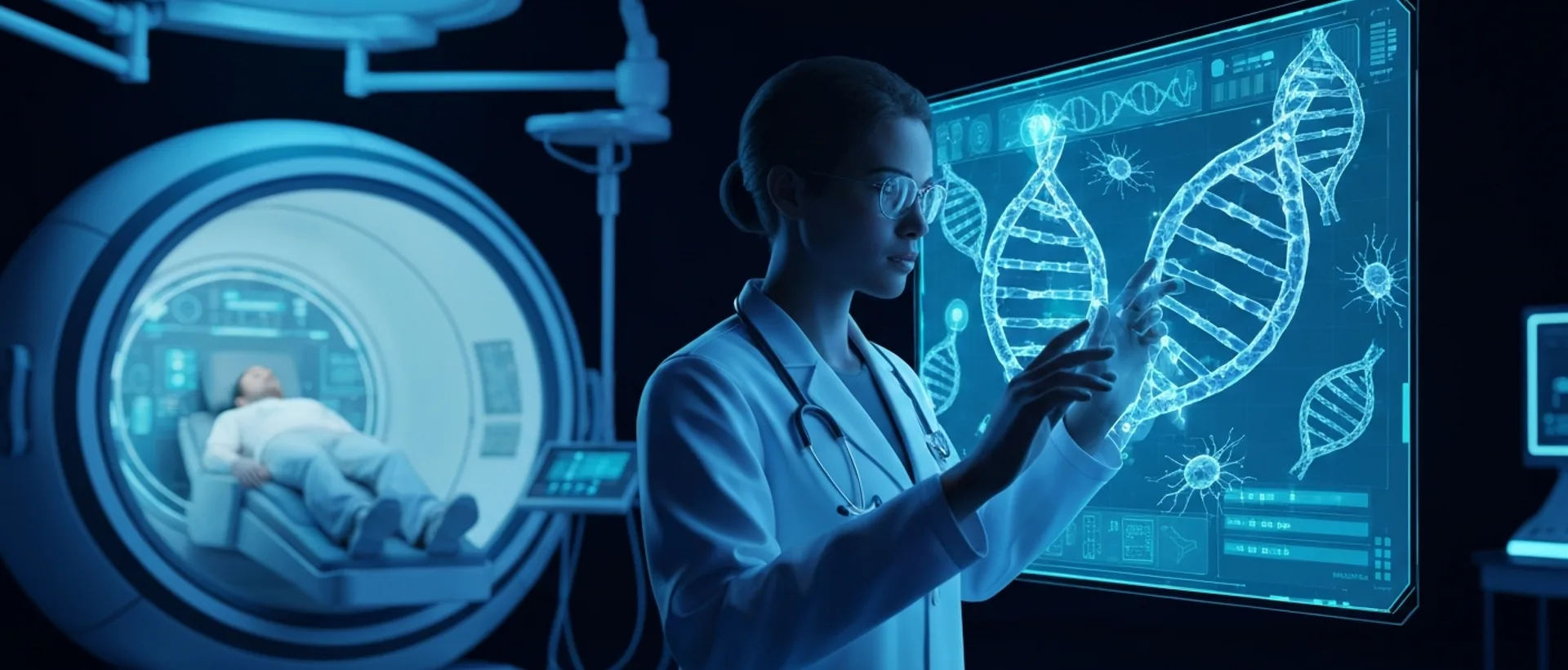
The optimistic narrative that the duo CRISPR AI cancer 2026 will “cure” this disease by then is, let’s be frank, quite naive. While the synergy between CRISPR artificial intelligence oncology promises important advancements in AI cancer gene therapies, the expectation of a universal and rapid solution ignores the complexity of cancer. AI accelerates the identification of genetic targets and improves the design of RNA guides for CRISPR. But this doesn’t negate the biological and ethical challenges that are still out there.
The idea that “how CRISPR and AI fight cancer” will translate into complete eradication in just two years is a dangerous oversimplification of scientific progress. I, for one, think it’s just talk to sell courses. Although AI can refine personalized gene editing, tumor heterogeneity and acquired resistance are barriers that even the most sophisticated algorithms cannot ignore in the short term. CRISPR cancer advancements 2026 will be notable, of course, but likely restricted to specific niches and therapies, far from the panacea some announce.
The Role of AI: Robotic Efficiency, Not Human Miracles
To deny the role of AI in gene editing would be immensely stupid. AI acts as an engine, analyzing mountains of genomic data to predict mutations, identify biomarkers, and even simulate gene editing outcomes before any physical experiment. It gives you the data, but it doesn’t do the dirty work.
However, this efficiency doesn’t automatically translate into cures. AI improves “how CRISPR and AI fight cancer” by refining the precision of molecular scissors, minimizing side effects, and accelerating the development of new cancer treatment approaches. It’s like having a supercomputer to plan a trip route, but you still have to drive the car.
“AI gives us a superpowered magnifying glass, but it is still us who need to decide where to look and what to do with what we see. The cure is not an algorithm.”
The truth is that AI is making research faster, not necessarily more “curative.” It’s a powerful tool, not the solution itself. CRISPR AI cancer research Brazil is exploring these frontiers, but with the caution of those who know there’s no “shortcut” for biology. The benefits of AI in precision medicine are undeniable, allowing CRISPR personalized gene editing with an unthinkable granularity, but CRISPR AI cancer challenges persist.
Insurmountable Challenges: Where Hype Meets Hard Reality
Despite all the buzz, the CRISPR AI cancer challenges are monumental and, often, totally underestimated. The effective delivery of CRISPR technology to target cells, the patient’s immune response, and the possibility of unpredictable side effects are huge obstacles. Did you think it was just a matter of pressing a button and presto? It’s not that simple.
For 2026, the promise of widely available “AI cancer gene therapies” for all cancer types is pure fantasy. The complexity of the tumor microenvironment and the adaptability of cancer cells are biological barriers that AI can help map, but not eliminate by decree. It’s like trying to hunt a chameleon in a forest: it always changes color.
The future of cancer treatment 2026 will see advancements, especially in niches like blood tumors or AI-enhanced CAR-T therapies. But a universal cure is still a distant mirage. Research and development are damn expensive, and the accessibility of these therapies, even if they work, will be a critical problem. The vision of a future where everyone has access to CRISPR personalized gene editing is utopian for two years from now.
A galera que promete “cura do câncer em 2026” com CRISPR e IA esquece que o câncer não lê o calendário. A biologia é teimosa, meu povo. #CRISPR #IA #Câncer
— @ciencia_real no Threads
The ‘Hot Take’: The Future of Cancer Treatment Will Be More Complex
My bet is that 2026 will not be the year of the “cancer cure” by CRISPR AI cancer 2026, but rather the year when the scientific community will finally admit the insurmountable complexity of eradicating the disease with a single approach. We will see the emergence of more effective treatments for specific subtypes, yes, but the vision of a universal “game changer” is a fallacy that sells headlines, not real science.
The combination of CRISPR and AI is a gigantic step, but cancer is an evolving adversary. The search for a cure is a marathon, not a sprint. AI gives us better shoes for this race, but the road is still long and full of potholes.
Instead of a cure, expect a series of “small victories” and more personalized approaches, where AI optimizes CRISPR to attack very specific vulnerabilities of each patient. This will prolong life and improve quality, but without the “magic bullet” that is so often promised. The true innovation in 2026 may be the scientific humility in recognizing that AI and CRISPR are powerful tools, but cancer biology is, and will continue to be, the supreme challenge. Prepare for a more nuanced, less sensationalized reality.
Ready to scale this idea?
Narratron turns topics like this into retention-optimized YouTube scripts in under 2 minutes — magnetic hook, structure, complete SEO, timestamped description and thumbnail prompt ready to ship. 50 free credits, no card required.