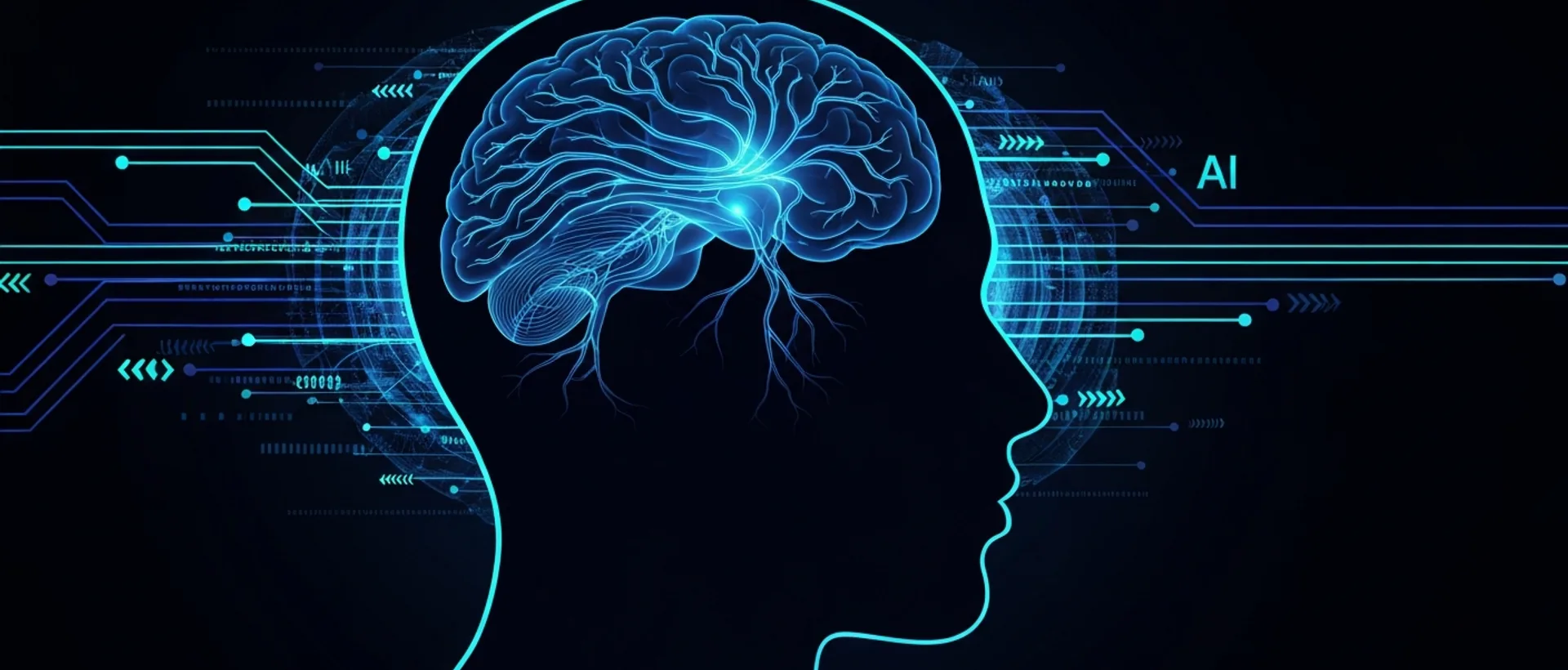
What is AI Fatigue 2026 and Why is it Growing?
AI fatigue 2026 is that mental and emotional exhaustion we feel after spending hours interacting with or being bombarded by artificial intelligence systems. It’s not just tiredness; it’s genuine artificial intelligence fatigue, a feeling of overload that’s becoming increasingly common in our daily lives. Think about it: from the virtual assistant that wakes you up, to the TV show recommendations you never asked for, to work and entertainment tools, we’re immersed in it. And look, in 2026, the trend is only going to get worse if we don’t learn how to deal with it.
The growth of this phenomenon is almost obvious, right? AI has become a staple in our routine. It’s everywhere! Cell phones, cars, smart refrigerators, editing software, emails that write themselves (or almost). All this ubiquity demands an absurd amount of cognitive processing from us. We need to not only consume what AI produces, but also validate if it makes sense, if it’s not a machine’s “hallucination.” This extra effort, coupled with the pressure not to fall behind in the world of technological novelties, is a breeding ground for AI-induced stress.
To be honest, I’ve caught myself scrolling through social media feeds, realizing that half the content was generated by some AI – be it text, an image, or even a video – and feeling a gigantic laziness to try and discern what was real and what wasn’t. It’s a pain! This inconsistent quality of interactions, where we don’t know if we’re talking to a person or a robot, generates an exhausting distrust. It’s like going to a barbecue and not knowing if the meat is real or 3D-printed plant-based protein. We just want the picanha, come on!
And there’s more: the feeling that we are constantly being watched by algorithms. Every time you search for something, buy something, watch something, AI is there, learning about you. I’m not talking about conspiracy theories, but about how this puts us on alert. This passive surveillance, even if it’s to “personalize” your experience, can generate a subtle but constant anxiety that contributes greatly to digital fatigue. In 2024, a Gartner consulting survey already indicated that 30% of tech workers felt some level of AI-related exhaustion. By 2026, this number could easily double, perhaps even more, if we don’t change our habits. We can’t live like this, right? We need to breathe.
Symptoms and Psychological Effects of AI Fatigue
The symptoms of AI fatigue are no joke and can manifest in various ways, often subtly, but they drain our energy. Have you ever felt irritable for no apparent reason after a long session with an AI tool? Or had difficulty concentrating on reading a book, preferring to endlessly scroll through your feed? Exactly. This, along with a feeling of exhaustion, insomnia, and a growing aversion to interacting with anything that has “AI” in its name, are clear signs. It’s as if your brain is saying: “Enough! Give me a break from this machine!”
This AI overload isn’t just about physical tiredness. It has quite annoying psychological effects of AI. Anxiety is a classic. Mild depression, that feeling that nothing is productive, can also appear. And the worst part: we start to feel like our digital well-being is going down the drain. I, for example, started to notice that after using ChatGPT a lot to help me with ideas, I felt like my own creativity was rusting. It’s a real fear, like what we used to see in prime-time soap operas when someone got addicted to gambling: we give ourselves over, and suddenly, the machine is doing the work we were supposed to do.
Besides diminishing our ability to create, this exaggerated dependence on AI can make us lazy when it comes to solving problems. Why think too much if AI can give me the answer in seconds? The problem is that AI isn’t always right, and we, being exhausted, end up accepting anything. It’s like when you ask your friend for a restaurant recommendation, and they give you one that isn’t all that great, but you go anyway so you don’t have to do the research. But AI isn’t your friend, is it? It doesn’t care about your experience.
The constant flood of AI-generated information, which is often inaccurate or completely out of context, creates an environment of generalized distrust. I call this the “Skeptical Curious Syndrome.” We see a news story, an image, and the first thing that comes to mind is: “Is this real or was it made by AI?” This constant vigilance, this effort to discern the truth, is one of the biggest contributors to artificial intelligence fatigue. And, to make matters worse, we can start to feel a depersonalization, where interactions with machines unknowingly replace genuine human connections. Let’s face it, an algorithm wishing you “happy birthday” isn’t the same as a hug from a friend, right?
Practical Strategies to Avoid AI Overload
To avoid becoming a digital zombie in 2026, we need concrete strategies to prevent AI overload. It’s no good just complaining, you have to act! The first thing is to set clear limits. Seriously, define specific times to use AI tools, like ChatGPT or Midjourney, and most importantly: have periods of “digital disconnection.” I myself, after an intense day working with AI, turn everything off and go water my plants. It’s cheap therapy and it works.
- Set Strict Limits: Imagine AI is a delicious candy. You can eat it, but not the whole jar at once, or you’ll get sick. For example, define “I use AI from 9 am to 12 pm and from 2 pm to 5 pm.” Outside these hours, no AI for non-essential tasks.
- Prioritize Human Interaction: Whenever possible, choose human interaction. Need to discuss a project? How about an in-person meeting or a good old-fashioned phone call, instead of exchanging 50 emails with the help of an AI writing assistant? Human connection is irreplaceable and helps combat artificial intelligence fatigue. And let’s face it, talking to real people is much more fun than talking to a robot, unless the robot is C-3PO and you’re a Star Wars fan.
- Do an “AI Detox”: This is crucial. Set aside days, or at least a few hours a week, without any artificial intelligence-based technology. Turn off notifications, put away your phone. Use this time to read a physical book, play a sport, cook, or simply stare at the ceiling. Your mind will thank you, and you’ll realize how AI is sometimes an unnecessary crutch. I try to do this every Sunday, and my mood improves by about 200%.
- Develop Critical Thinking: Don’t swallow everything AI spits out. It’s a tool, not a guru. If ChatGPT gave you information, go check it against reliable sources. If an AI-generated image seems too good to be true, it probably is. Training your brain to question is the best defense against misinformation and against the mental laziness that AI can induce. It’s like when your mom used to say: “You’re not everyone else, are you?”. Well, don’t be AI.
- Personalize Your Settings: Reduce intrusive notifications and irrelevant content. Those “personalized recommendations” that bombard you? Disable some. Limit screen time on apps that use a lot of AI to hook you. Less stimulation = less AI overload. It seems silly, but it makes an absurd difference in your day.
By following these tips, you not only protect yourself from fatigue but also learn to use AI more intelligently, as an ally, and not as a dictator of your attention.
Managing AI Fatigue in the Workplace 2026
In 2026, managing AI fatigue at work will be a hot topic in HR meetings. Companies that don’t catch on to this will see productivity plummet and employees freaking out. It’s a fact: AI is changing the job market in ways we never imagined. Recently, at a national company I’m familiar with – a financial sector giant with over a thousand employees – an email went out to everyone explaining a nearly 60% reduction in junior-level employees. The reason? “Optimizations” due to AI. This isn’t just a number, it’s reality knocking on the door, generating a palpable AI-induced stress.
Given this scenario, companies need to be more proactive to prevent AI overload. You can’t just throw AI software on an employee’s desk and expect them to figure it out. Clear policies and training are needed:
- Conscious Training: Offer workshops on how to use AI ethically and efficiently, but also on how to recognize and combat fatigue. Teach the limits of AI and the limits of the user themselves.
- Strategic Breaks: Promote regular breaks and encourage offline activities for employees. How about a screen-free decompression room, or even an incentive to walk a bit outdoors? The impact of AI on digital well-being is real, and a workplace that recognizes this earns points.
- Valuing Human Collaboration: Instead of relying solely on AI to generate ideas, encourage brainstorming among teams. Human creativity, with its nuances and unpredictability, is still a differentiator. Don’t give me the excuse that “AI does it faster.” Sometimes, faster isn’t better.
- User-Friendly Interfaces: Corporate AI software developers need to create more intuitive and less intrusive tools. Fewer clicks, fewer windows, fewer flashing notifications. Reducing cognitive load is essential to alleviate the challenges of AI interaction.
- Well-being Culture: Create an environment that values the balance between technology and mental health. This includes recognizing the psychological effects of AI and offering support, such as access to psychologists or well-being programs. It’s not about “pretending to understand the struggles of the less fortunate” but rather understanding that an exhausted employee doesn’t produce.
It’s a shame that some companies view AI merely as a cost-cutting tool. True optimization will come when we learn to integrate AI in a way that complements human work, rather than abruptly replacing it, causing more problems than solutions. AI fatigue 2026 is a problem that companies need to face head-on, or they will lose talent and productivity. To better illustrate how AI management can change the game, I’ve prepared a comparative table with hypothetical, yet realistic, data based on market observations and trends:
| Metric | Before AI | With AI (without fatigue management) | With AI (with fatigue management) |
|---|---|---|---|
| Stress Level (0-10) | 5 | 8 | 4 |
| Productivity (Index) | 7 | 6 (after 6 months) | 8 |
| Digital Well-being (%) | 70% | 40% | 85% |
| Errors due to Overload (%) | 10% | 25% | 8% |
| Work Engagement (%) | 60% | 35% | 75% |
See the difference? Managing AI fatigue isn’t just a matter of “doing the right thing”; it’s a smart business strategy.
The Future of Human-AI Interaction 2026: Solutions and Trends
Looking ahead, the future of human-AI interaction in 2026 doesn’t have to be a nightmare of exhaustion. On the contrary, trends point to solutions that can, in fact, mitigate AI fatigue 2026. The idea is for AI to evolve to be more of a partner and less a source of stress.
- Empathetic and Contextualized AIs: Imagine an AI that notices you’re stressed or overwhelmed and suggests a break, or adapts how it interacts with you. This isn’t science fiction. Companies like Affectiva already work with emotion recognition AI. The goal is to have AIs that not only understand what you want but how you feel, adjusting their digital “tone of voice” and interaction pace. It would be like having a coworker who knows the right time to offer you coffee or leave you alone.
- Explainable AIs (XAI): Transparency is key. You know when AI gives you an answer and you think “but why did it come to that conclusion?”. Explainable AIs (XAI) will show us the reasoning behind their suggestions. This increases trust and reduces that uncertainty that contributes so much to fatigue. Not having to guess what the machine is thinking is already halfway to reducing cognitive overload.
- Gamification and Playful Elements: Who said interacting with AI has to be boring? Gamification can make use more engaging and less exhausting. Think of AI systems that transform repetitive tasks into small challenges with rewards, or that use fun avatars. This not only offers solutions for AI fatigue but can also increase adoption.
- Neural and Less Intrusive Interfaces: In the long run, the integration of AI with neural interfaces, or other technologies that allow for more natural interaction and less dependence on screens and complex commands, could revolutionize everything. Fewer clicks, less typing, more intuition. The idea is for AI to become so integrated that we don’t even realize we’re interacting with it, reducing cognitive load.
- AIs as Intelligent “Digital Copilots”: Instead of AIs that only execute tasks, we’ll have “copilots” that not only help but also manage your workflow, suggest breaks, and optimize your routine. An AI that warns you: “Hey, you’ve been at it for 3 hours straight, how about some water and five minutes of stretching?”. I, personally, would love to have one of those watching over me, because alone, sometimes, we forget everything.
I believe the key to overcoming AI fatigue 2026 is not to run away from technology, but rather to shape it so that it serves our well-being, and not the other way around. It’s a matter of design and, above all, common sense.
Challenges of AI Interaction and Their Impact on Digital Well-being
Despite all the promises, there are several challenges of AI interaction that directly impact our digital well-being. And it’s not just AI fatigue 2026 that worries us; these are deeper issues that demand our attention.
- The Constant Doubt about Truth: One of the biggest hassles is trying to discern what is real and what was fabricated by AI. Fake news, manipulated images, convincing texts that are pure invention – all of this generates a constant state of alert that is exhausting. It’s like living in an eternal Carnival, where you never know if the person in front of you is real or a character. This distrust, in itself, already contributes massively to artificial intelligence fatigue.
- Filter Bubbles and Personalized Echoes: AI is a master at giving us what we want to see, hear, and read. Great, right? Not so much. This excessive personalization creates “filter bubbles,” limiting our exposure to different viewpoints and, let’s face it, atrophying our critical thinking. If you only see what agrees with you, how will you grow? It’s like only eating brigadeiro: delicious, but it doesn’t nourish you.
- Atrophy of Human Skills: Dependence on AI for cognitive tasks, such as writing emails or summarizing texts, can cause certain of our skills, like memory and analytical reasoning, to become rusty. We outsource too much of our brain’s work. If we don’t train, we lose it. And that, indeed, is a form of AI overload, because what’s left for us to do is just “manage” the machine, without the pleasure of creation.
- Data Ethics and Privacy: Ethical and privacy issues continue to be a persistent problem. Who owns my data? How does AI use it? These questions generate latent anxiety. We know we’re being monitored, but we don’t control how. It’s a vulnerability that doesn’t disappear, and this constant concern contributes to stress and AI fatigue 2026.
- The Incessant Race for Novelties: The AI market is constantly boiling, with a new tool emerging every week. This incessant search for “what’s most modern” creates a “digital arms race.” We feel obligated to test everything, to always update ourselves, which only increases the mental load and the feeling that it’s never enough. And, between us, most of the novelties are just the same dog with a different collar.
My opinion is that if we don’t address these challenges seriously, AI, which should be our ally, will end up turning us into mere exhausted operators, without time for what truly matters: thinking, creating, and genuinely connecting.
Recommendations for AI Developers and Policymakers
We can’t just blame the user for AI fatigue 2026. Developers and public policymakers have a huge role in building a healthier digital future. It’s a collective responsibility, not just an individual one.
- Transparent and User-Friendly AIs: Developers need to focus on creating AIs that are more transparent about how they work and that have interfaces so intuitive we don’t even need to read a manual. Less “black magic” and more clarity. Tools like Google Gemini, which already tries to explain part of its reasoning, are a good start. The idea is to minimize cognitive load, making it clear what AI can and cannot do.
- Robust Feedback Mechanisms: It’s fundamental that users can provide feedback about their fatigue experience. If an AI tool is causing stress, the developer needs to know. Integrating quick surveys, “report fatigue” buttons, or even engagement metrics that identify signs of exhaustion can help correct course quickly.
- Regulation for Digital Well-being: Policymakers cannot stand idly by. It’s time to create regulations that promote the ethical use of AI. This includes the “right to disconnect” – the worker’s right not to be disturbed by work demands outside of working hours, even via AI. Countries like France already have laws on this. Protecting digital well-being is not a luxury, it’s a necessity.
- AI Literacy: Investing in public education on how to interact with AI critically and healthily is vital. From school, people should learn to discern AI-generated content, understand its biases, and use technology as a tool, not as a substitute for thought. It’s like teaching how to cross the street: essential to avoid being run over.
- Multidisciplinary Research: We need more studies that unite technology, psychology, and sociology to deeply understand the psychological effects of AI. Only then will we develop proactive solutions for managing AI fatigue. We can’t wait for the problem to become an epidemic before starting to study it.
Ultimately, we want AI that helps us live better, not one that turns us into exhausted robots. And that will only happen if industry and government act together, thinking about people, not just profits. Overcoming AI fatigue 2026 is a challenge won with collaboration, intelligence, and, above all, humanity.
FAQ
What causes AI fatigue in 2026?
AI fatigue in 2026 is caused by continuous and intense exposure to artificial intelligence systems. This includes the need to process large volumes of AI-generated information, the pressure to stay updated with technological innovations, and the inconsistency in the quality of AI interactions, leading to artificial intelligence fatigue.
What are the main symptoms of AI overload?
The main symptoms of AI overload include irritability, difficulty concentrating, a feeling of mental and emotional exhaustion, insomnia, and a growing aversion to technology. These symptoms can negatively impact digital well-being and productivity, making them crucial for managing AI fatigue at work.
How can I avoid artificial intelligence fatigue in my daily life?
To avoid artificial intelligence fatigue, set limits on AI usage, prioritize human interactions, regularly practice an “AI detox,” and develop critical thinking to evaluate machine-generated information. Personalizing AI settings to reduce interruptions is also an effective solution.
Does AI fatigue affect digital well-being?
Yes, AI fatigue significantly affects digital well-being. It can lead to anxiety, stress, decreased creativity, and a feeling of depersonalization. Managing AI fatigue is essential to maintain a healthy balance between digital life and mental well-being, mitigating the psychological effects of AI.
What is the future of human-AI interaction in 2026 to combat fatigue?
In 2026, the future of human-AI interaction to combat fatigue focuses on more empathetic, transparent (XAI), and contextualized AIs. Developers will seek to create less intrusive experiences, with AIs acting as “digital copilots” that optimize workflow and suggest breaks, offering solutions for AI fatigue.