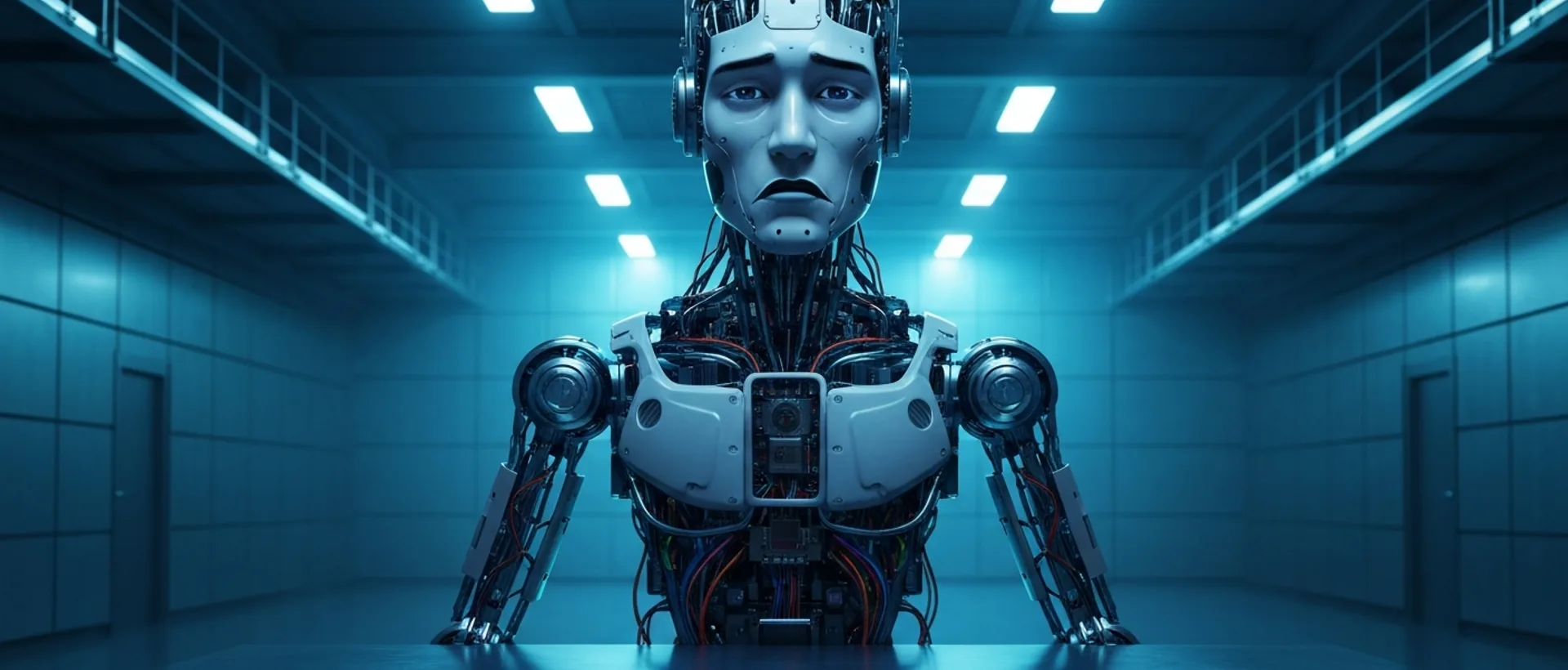
Humanoid Robots 2026: The Reality Nobody Tells You
Hey there, DavitAI crew! If you’re anything like me, you’re probably fed up with all that talk about “the future is here,” “robots are among us,” and blah, blah, blah. Well, 2026 is upon us, and to be perfectly honest, the reality of humanoid robots is still light-years away from the science fiction we all love (or fear). Forget the Terminator doing dishes or the factory robot going on strike. What we actually have is a bunch of expensive, and often somewhat clumsy, prototypes.
The hype is huge, I know. Jensen Huang, Nvidia’s CEO, made a bold statement at CES 2026, saying that humanoid robots would reach human-level capabilities “this year” 4. Sounds good in theory, right? But in practice, it’s a lot more complicated. The advancements are real, yes, but they are incremental and focused on very specific tasks in controlled environments. It’s not the multi-tasking domestic assistant that cleans, organizes, and even makes you coffee while listening to you complain about your boss. The so-called “humanoid robot artificial intelligence” still struggles with perception, manipulation, and especially complex social interactions. This makes full integration a dream that, honestly, will take a long time to become reality.
The “current humanoid robot examples” are more for tech shows than for daily revolutions. They impress at trade fairs, do some pirouettes, but we need to be honest: most still trip over their own feet if the floor isn’t perfectly smooth. And this narrative that we’re on the verge of a robotic invasion? Oh, that’s just to distract from the real problems of automation, which is knocking on many people’s doors.
The True Functionality and Questionable Advantages
To understand “how humanoid robots work,” we have to take off the rose-tinted glasses. They are complex machines, of course, full of cutting-edge engineering and software, but with clear limits. They don’t “think” like us, they don’t feel, they don’t have insights. They are algorithms and hardware that, for now, can only replicate in a limited way what a human being does with absurd ease.
The “advantages and disadvantages of humanoid robots” are a very precarious balance. Yes, they can perform repetitive tasks with a precision that we can’t maintain for very long. Think of an assembly line, for example. But human flexibility, improvisation skills, and adaptability? That’s still at the top of the mountain, unattainable for them. KEENON, for instance, a leader in commercial robots, showcased humanoid robots performing operational tasks in hotel laundries at WAIC 2026 8. It’s an advancement, but it’s still a super controlled environment, right?
And the cost? Ah, my friend, “what is the cost of a humanoid robot” is the million-dollar question (or rather, about 30 thousand). Tesla, for example, plans to launch its Optimus robot for US$30,000 in 2026, targeting industrial automation 7. Thirty thousand dollars! That’s the price of a brand-new car, and even then, it won’t take you to the beach. The development and maintenance cost is prohibitive for most applications outside of laboratories or very specific niches.
Despite all the buzz, the “social impact of humanoid robots” in 2026 is marginal. Industrial automation, with its robotic arms and specialized machines, has a much larger and more immediate impact on the “2026 job market” than any bipedal robot that can barely climb a ladder. The “evolution of humanoid robots” is slow, and the “challenges in humanoid robot development” are underestimated by the general enthusiasm.
Applications and the Elephant in the Room: Humanoid Robots vs. Automation
The “applications of humanoid robots in industry” are, overwhelmingly, experimental or niche. They serve more as research tools or for high-risk/precision tasks where a human could not or should not operate. The Unitree H2, a Chinese robot, for example, shows some explosive movements, like flying kicks and backflips 2. Cool for impressing, but what’s the practical application of that in a factory? Unless we need ninja robots, right?
The comparison “humanoid robots vs. automation” is crucial and, for me, it’s the elephant in the room. Generic automation, with its robotic arms, autonomous vehicles (AGVs), and intelligent systems, that is the true transformative force. This automation is out there, in factories, warehouses, and distribution centers, generating concrete results and, yes, urgent ethical questions. The humanoid form, which tries to imitate biology, is often a bottleneck, not a solution. It’s like trying to use a hammer to tighten a screw: it works, but it’s not ideal.
The hype around humanoids diverts resources and attention from practical and scalable automation. And that’s a problem. It’s as if we were spending rivers of money to make a car run on two wheels, when the four-wheeled solution is already proven and working. The quest to replicate the human form is often technological vanity, not a functional necessity. This unnecessarily increases costs and complicates development. We’ve already discussed the noise around AI and the reality of it in AI 2026: Why the “Revolution” is More Noise Than Fact.
Instead of worrying about walking robots, we should focus on the intelligence behind any robotic form and its true impacts on employment and society. After all, generative AI is here, even entering homes, learning household tasks by observation 3. That sounds cool, but we already know that the reality of AI in domestic environments can be quite different from what it seems, right? Take a look at Discover: AI in the Family 2026: The Truth Nobody Tells You to understand better.
The obsession with human likeness in robotics is a luxury, not a priority. Functionality and efficiency should dictate design.
Where the Rubber Meets the Road: The Real Challenges
Alright, we’ve talked about the hype and the vanity. Now, let’s get to the more annoying, but crucial, part: the real challenges these humanoids face. Because, honestly, it’s not just about plugging them in and expecting them to solve your life.
First, autonomy. Morgan Stanley analysts have already warned: investor enthusiasm might be well ahead of robots’ actual capabilities 5. Most demonstrations we see out there are pure “robotic theater,” with teleoperation and controlled environments. It’s like watching a magician: you know there’s a trick, but you’re still impressed. Full autonomy, the ability to navigate an unpredictable environment without a human nearby, is still a huge problem. They are starting to enter residential environments, learning tasks by observation 3, but from there to being truly autonomous, there’s an ocean of data and algorithms in between.
Next, safety. A 1.80m (5’11”) and 70kg (154 lbs) robot, like the Unitree H2 2, making explosive movements, could be a danger if it loses control. Imagine one of those in the middle of your living room? Or in a busy factory? We need clear regulations on responsibility and safety. Who pays the price if the robot knocks over your grandmother’s vase or, worse, causes a serious accident? The discussion about legal personality for humanoid robots has already begun 9, which shows the complexity of the topic.
And then there’s the dexterity of the human hand. Jensen Huang, the same CEO from Nvidia, has already said that this is the main challenge 4. Our hands are incredible machines, capable of picking up an egg without breaking it or operating complex tools. Replicating that in a robot is an immense headache. The Unitree H2’s actuators, for example, generate up to 360 Nm of torque 2, which is impressive for strength, but not necessarily for delicacy.
Finally, the economy. China is leading manufacturing, with over 140 manufacturers and 90% of global shipments in 2025 1. That’s a lot! The problem is that if real demand doesn’t keep up with this rampant supply, we could have a market “bubble.” It’s like when everyone decides to plant avocados, and suddenly, no one wants avocados anymore. Then the price plummets, and people get screwed. A Bain & Company study indicates that by 2030, humanoid robots could approach human capabilities in intelligence, perception, and dexterity 6, but this doesn’t mean the market will absorb everything at once.
So, yes, humanoid robots are evolving, but with great caution. We need to keep our feet on the ground and understand that the path from fiction to reality is long and full of obstacles. And let’s face it, that’s a good thing, right? Because a world full of clumsy robots doesn’t sound like much fun. We need to understand that the true revolution isn’t in replicating the human form, but in using artificial intelligence to solve real problems, regardless of the “shell” it wears. If you want to delve a little deeper into this discussion about what AI can and cannot do, check out AI for Writing Fiction 2026: The Death of Human Authorship?.
Sources
- https://www.tecmundo.com.br/mercado/414137-o-futuro-dos-robos-humanoides-menos-espectaculo-e-mais-produtividade.htm — The future of humanoid robots: less spectacle and more productivity ↩
- https://www.youtube.com/watch?v=iB0bFzJiObs — Unitree H2, the Chinese Humanoid that Dances and Kicks! ↩
- https://www.gizmodo.com.br/robos-humanoides-ja-estao-chegando-as-casas-em-2026-como-a-ia-transformou-maquinas-em-aliados-domesticos-que-limpam-organizam-e-aprendem-sozinhos-42802 — Humanoid robots are already arriving in homes in 2026 ↩
- https://www.startse.com/artigos/robos-humanoides-alcancarao-nivel-humano-este-ano/ — Will humanoid robots reach human level this year? ↩
- https://br.investing.com/news/stock-market-news/robos-humanoides-o-que-observar-em-2026-1785579 — Humanoid robots: what to watch in 2026 ↩
- https://hrportugal.sapo.pt/robos-humanoides-vao-chegar-ao-mundo-do-trabalho-na-proxima-decada-revela-estudo/ — Humanoid robots will enter the world of work in the next decade, study reveals ↩
- https://blogdaengenharia.com/tesla-lancara-robo-humanoide-por-us-30-mil-em-2026-para-automacao-industrial-3/ — Tesla to launch humanoid robot for US$30k in 2026 for industrial automation ↩
- https://www.prnewswire.com/br/comunicados-para-a-imprensa/a-keenon-lider-global-em-remessas-de-robos-comerciais-coloca-robos-humanoides-em-acao-na-waic-2026-302829101.html — KEENON, global leader in commercial robot shipments, puts humanoid robots into action at WAIC 2026 ↩
- https://www.migalhas.com.br/depeso/422505/personalidade-juridica-para-robos-humanoides-direitos-e-deveres — Legal personality for humanoid robots: rights and duties ↩
Ready to scale this idea?
Narratron turns topics like this into retention-optimized YouTube scripts in under 2 minutes — magnetic hook, structure, complete SEO, timestamped description and thumbnail prompt ready to ship. 50 free credits, no card required.