Midjourney Medical 2026: The Raw Reality Behind the Hype (and the Madness of “Diagnostic Spas”)
Hey tech and innovation folks! This is Davi, and today we’re going to take a closer look at a topic that’s stirring up a lot of discussion: Midjourney, the one that creates images that blow us away, has decided to take a quantum leap (or perhaps a leap in the dark?) into the healthcare sector. Yes, you read that right. The company that helps you create digital art now wants to scan you from the inside out. Can you believe it?
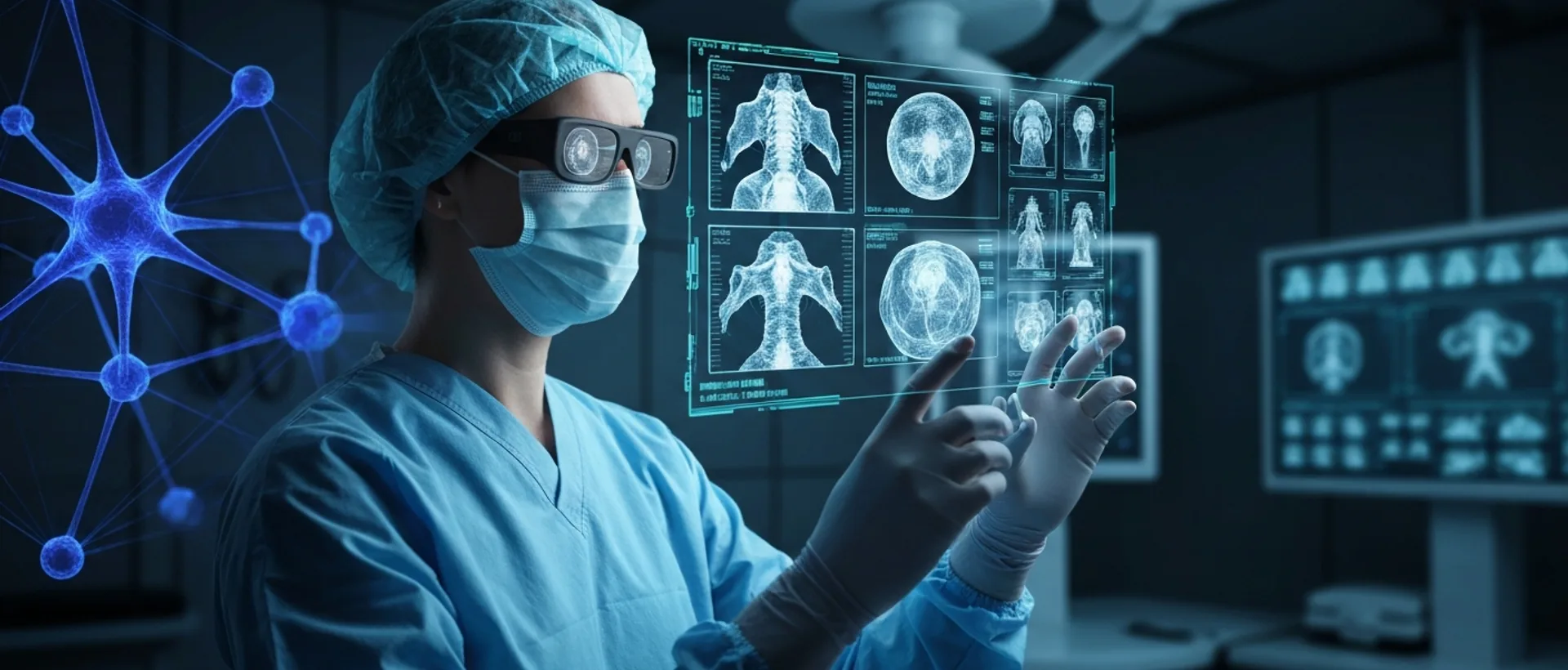
The promise? A full-body ultrasonic scanner, called “Midjourney Scanner,” launched on June 17, 2026 [portaltela.com], under the new “Midjourney Medical” division [substack.com]. The idea is to perform quick exams, without radiation, and even open some “Midjourney Spas” in 2027, starting in San Francisco [substack.com]. The ambition is great, with claims that the technology can be “better than MRI machines” and “prevent 30% of all deaths and reduce healthcare costs by 50%” [bug.hr]. But, hold on, it’s one thing to draw a cyberpunk unicorn, and another to diagnose a serious illness. We need to be realistic here. AI in healthcare is a reality, yes, and it has incredible potential, but it’s not a free-for-all.
The transition from a generative AI image tool to the development of a full-body ultrasonic scanner is, at the very least, audacious. Honestly, it’s a move that makes me scratch my head. Midjourney is great at creating things that don’t exist, at giving form to imagination. But medicine? Ah, my friend, medicine deals with what exists, with the reality of the human body, with life and death. You can’t “generate” a diagnosis. You can’t “style” a tumor. Precision, clinical validation, and responsibility are the basis of everything. That’s why, as much as I admire the boldness, we need to talk about the difference between hype and what actually works in the real world of healthcare. And Brazil, as always, is already positioning itself to bring order to things.
The Quantum Leap (or Quantum Leap into the Abyss?) of Midjourney in Healthcare
Let’s be honest: who wouldn’t want a full check-up in 60 seconds, without radiation, and all in a fancy “spa”? Sounds like something out of a sci-fi movie, right? Midjourney is betting all its chips on this, with the “Midjourney Scanner” promising exactly this marvel [diariobitcoin.com]. The idea is to democratize access to advanced exams and, who knows, even change the way we approach preventive healthcare.
But we need to take a deep breath and remember that, behind all this publicity, there’s a mountain of bureaucracy, scientific validation, and ethics. Midjourney still needs to obtain regulatory approval, like the FDA’s in the US, for the diagnostic capabilities of this device to be taken seriously [bug.hr]. And let’s be honest, the claims of “preventing 30% of all deaths” and “reducing healthcare costs by 50%” are so ambitious that they sound a bit… exaggerated. This has not yet been clinically proven on a large scale, and that’s where the trouble begins.
The truth is that AI in healthcare is moving towards a predictive and connected model [mv.com.br], with data integration and personalized care. A 2026 survey indicated that the use of AI is the biggest trend in healthcare, with [!STAT] 38% of professionals considering it as such [viva.com.br]. But the AI we’re talking about is the one that helps organize scenarios, prioritize risks, and support safer medical choices [horadecodar.com.br], not the one that creates a pretty image from a prompt. It’s the AI that assists, that provides support, that processes data that a human would take years to digest.
The excitement around the “Midjourney Scanner” is understandable, but it’s crucial to remember that promises of “miracle cures” or “instant diagnoses” without rigorous validation and regulatory approval can be dangerous. Healthcare is serious business, not a playground for generative AI.
The difference between the Midjourney we know and what they want to be in medicine is stark. One is a digital artist; the other needs to be a data scientist in a white coat. And for that, my friend, the road is long and full of challenges, especially when we talk about responsibility and patient safety.
The Brazilian Regulatory Reality: CFM Brings Order to Things
While the world gets excited about futuristic promises, Brazil, always attentive, already has its pen in hand to regulate things. And look, the Federal Council of Medicine (CFM) is not messing around. On March 16, 2026, they published CFM Resolution nº 2.454/2026, which is the first federal regulatory framework for the use of AI in Brazilian medical practice [legismap.com.br]. This is a watershed moment because it places Brazil at the forefront of ethical and legal discussion.
The CFM resolution is crystal clear: AI should be a supporting tool, a doctor’s right-hand tool, and never, ever, replace human clinical decision-making [afya.com.br]. Human supervision is mandatory, and the final diagnosis, the responsibility, continues to rest with the doctor. This was reinforced on February 27, 2026, and it is a crucial point [globo.com]. Think about it: if a Midjourney AI system says you have something and the doctor disagrees, who will you believe? The machine that makes art or the professional who studied for years for this?
This regulation is a reality check for those who dream of an autonomous diagnostic “spa.” In Brazil, patients have the right to refuse the use of AI in their treatment or diagnosis [globo.com]. This means that trust, the doctor-patient relationship, remains the central point. It’s not just about putting a robot to scan and that’s it.
The CFM Resolution sends a clear message: AI is welcome in medicine, but with responsibility, ethics, and, above all, with humans in charge. It consolidates itself as essential support in clinical decision-making [horadecodar.com.br], helping to organize scenarios and prioritize risks, but not as a substitute. For those who want to understand more about how AI is changing the game in Brazilian healthcare, it’s worth checking out the article Discover: AI in Healthcare 2026: Diagnosis and Future Reality. It’s a complex topic, and the CFM is doing its homework to protect us.
Ethical Challenges and the “Diagnostic Spa”: A Recipe for Chaos?
Now, let’s dive into the hotbed of ethical issues. The idea of a “Midjourney Spa” where you walk in, get scanned in one minute, and leave with a diagnosis, however appealing it may seem, raises more red flags than a Formula 1 car. Who guarantees the privacy of your health data? Midjourney, which until yesterday was generating images of space kittens, will now be the guardian of your most sensitive information? The CFM is already discussing the ethical challenges of digital health and the impact of AI [cfm.org.br].
The explainability of AI algorithms is another problem. If the Midjourney scanner finds something suspicious, will it be able to explain how it reached that conclusion? Or will it be a “trust me, I’m AI”? In medicine, there’s no “trust me.” There’s evidence, there’s justification, there’s the possibility of audit and a second opinion. Bioethics and digital health already point out that explainability is one of the major ethical and legal challenges in the use of AI in healthcare [proceedings.science].
“AI is a tool to assist the doctor, not to replace them. The final decision and responsibility for the patient always rest with the healthcare professional.” Note: Paraphrased quote based on CFM guidelines, not a direct quote.
Think about responsibility: if the scanner fails and gives a wrong diagnosis, who takes the blame? Is it Midjourney? Is it the “spa”? Is it the doctor who signed off without fully understanding how the AI reached that conclusion? The CFM Resolution is crystal clear: the final responsibility is the doctor’s [globo.com]. This means that the doctor cannot simply delegate the task of diagnosing to a machine. They need to understand, validate, and assume responsibility.
The truth is that artificial intelligence in medicine is a delicate field, and we cannot treat this as just another marketing tool. A serious dialogue is needed between developers, doctors, patients, and regulators. Otherwise, what was meant to be a promise of preventive health could turn into a source of anxiety, collective hypochondria, and, in the worst-case scenario, medical errors. If you’re thinking about how to prepare for the future of AI, it might be more useful to deeply understand the tools that are truly changing the market, like a ChatGPT Operator 2026: Your Career in the Future of AI?, than to expect a miracle from the diagnostic “spa.”
Where AI Really Helps Medicine (and where Midjourney doesn’t)
To show I’m not just being negative, let’s talk about where AI really shines in medicine. It’s not in “generating” diagnoses or “creating” medical images from scratch. It’s in processing large volumes of data, identifying patterns that the human eye would miss, and supporting clinical decision-making.
For example, AI systems that analyze imaging exams (MRI, CT scans, X-rays) with impressive precision to detect tiny lesions that would go unnoticed. This AI is trained with millions of real exams, validated by specialists, and not with creative prompts. It doesn’t create the image; it analyzes the existing image. AI in medicine consolidates itself as essential support in clinical decision-making, helping to organize scenarios and prioritize risks [horadecodar.com.br].
We also have AI in genomic research, accelerating the discovery of personalized treatments for complex diseases. Or in optimizing hospital processes, reducing waiting lists, managing inventories, and improving efficiency. This is AI that changes the game, saves lives, and optimizes resources. These are tools that provide evidence-based insights, automate repetitive tasks, and augment human capabilities, not those that generate ‘art’ in a field where art should be precision and truth.
The insistence on fitting general-purpose AI tools into highly specialized domains like medicine diverts resources and attention from truly impactful AI developments. Discernment is needed to separate marketing from real progress. Midjourney can be incredible for visualizing medical concepts, for creating educational materials for patients, or even for illustrating scientific articles. But from there to wanting to be a “mobile diagnosis”? It’s a huge leap, with an abyss in between.
If you’re excited about AI and want to see it in action for real, look for validated use cases, for companies that are investing heavily in research and development with solid scientific bases, and that work hand in hand with the medical community. And if your thing is more about AI that you can use in everyday life, even without being a doctor, you might be interested in Local AI on PC 2026: Unveiling the Decentralized Future. Just a tip.
Conclusion: Between Hype and Collective Hypochondria
So, what’s the real deal? Midjourney in healthcare is an idea that, for now, seems more like a well-intentioned but short-lived endeavor (and with a lot of marketing) than a revolution. The ambition is huge, the promises are seductive, but the reality of medicine is complex, regulated, and, above all, human.
Brazil, with CFM Resolution nº 2.454/2026, has already made it clear: AI is a tool, a support, but the pen and the final responsibility belong to the doctor. There are no shortcuts to ethics, patient safety, and scientific validation. This is the unpleasant part, but it’s the part that ensures we won’t turn medicine into an unsupervised AI testing ground.
We need to be skeptical, question grandiose promises, and demand solid evidence. AI will, indeed, transform healthcare, but this transformation will be gradual, based on serious research, and always with the patient at the center. It’s not a magic button that solves everything in 60 seconds. The future of healthcare with AI is promising, yes, but it is a future built brick by brick with science, ethics, and regulation, and not with the speed of an image generator. Food for thought.
Sources
- https://www.portaltela.com/noticias/ciencia/2026/06/17/startup-de-ia-midjourney-muda-foco-para-saude-com-maquina-de-ultrassom/ — AI startup Midjourney shifts focus to healthcare with ultrasound machine ↩
- https://aplicacionesai.substack.com/p/midjourney-pasa-de-crear-imagenes — Midjourney goes from creating AI images to ultrasound body scanners for personal health ↩
- https://www.bug.hr/tehnologije/midjourney-ulazi-u-sektor-zdravstva-s-inovativnom-tehnologijom-za-ultrazvucno-60720 — Midjourney enters the healthcare sector with innovative full-body ultrasound scanning technology ↩
- https://www.diariobitcoin.com/noticias/midjourney-quiere-entrar-a-la-medicina-con-un-escaner-corporal-de-60-segundos/ — Midjourney wants to enter medicine with a 60-second body scanner ↩
- https://mv.com.br/blog/o-que-esperar-do-futuro-com-novas-atualizacoes-da-ia-para-a-saude — What to expect from the future with new AI updates for healthcare ↩
- https://viva.com.br/saude-e-bem-estar/pesquisa-aponta-que-uso-da-ia-deve-ser-a-maior-tendencia-na-saude-em-2026.html — Research indicates that AI use should be the biggest trend in healthcare in 2026 ↩
- https://horadecodar.com.br/inteligencia-artificial-medicina-2026/ — Artificial Intelligence in Medicine: Advances and Perspectives for 2026 ↩
- https://legismap.com.br/conteudos/artigos-e-noticias/inteligencia-artificial-na-medicina-passa-a-ter-novas-regras-no-brasil — Artificial Intelligence in Medicine now has new rules in Brazil ↩
- https://portal.afya.com.br/saude/brasil-regulamenta-uso-de-ia-na-medicina-e-reforca-decisao-clinica-como-ato-humano — Brazil regulates the use of AI in medicine and reinforces clinical decision as a human act ↩
- https://g1.globo.com/saude/noticia/2026/02/27/brasil-cria-primeira-regra-para-ia-na-medicina-diagnostico-nao-pode-ser-automatico-e-paciente-podera-recusar-uso.ghtml — Brazil creates first rule for AI in medicine: diagnosis cannot be automatic and patient may refuse use ↩
- https://portal.cfm.org.br/noticias/desafios-eticos-da-saude-digital-e-impacto-da-ia-marcam-painel-do-1o-forum-de-saude-digital-do-cfm/ — Ethical Challenges of Digital Health and Impact of AI Mark Panel of CFM’s 1st Digital Health Forum ↩
- https://proceedings.science/bioetica-2023/trabalhos/desafios-eticos-e-legais-no-uso-de-inteligencia-artificial-em-saude-desafios-e-o — Ethical and Legal Challenges in the Use of Artificial Intelligence in Healthcare: Challenges and the Future of Brazilian Legislation ↩
Ready to scale this idea?
Narratron turns topics like this into retention-optimized YouTube scripts in under 2 minutes — magnetic hook, structure, complete SEO, timestamped description and thumbnail prompt ready to ship. 50 free credits, no card required.