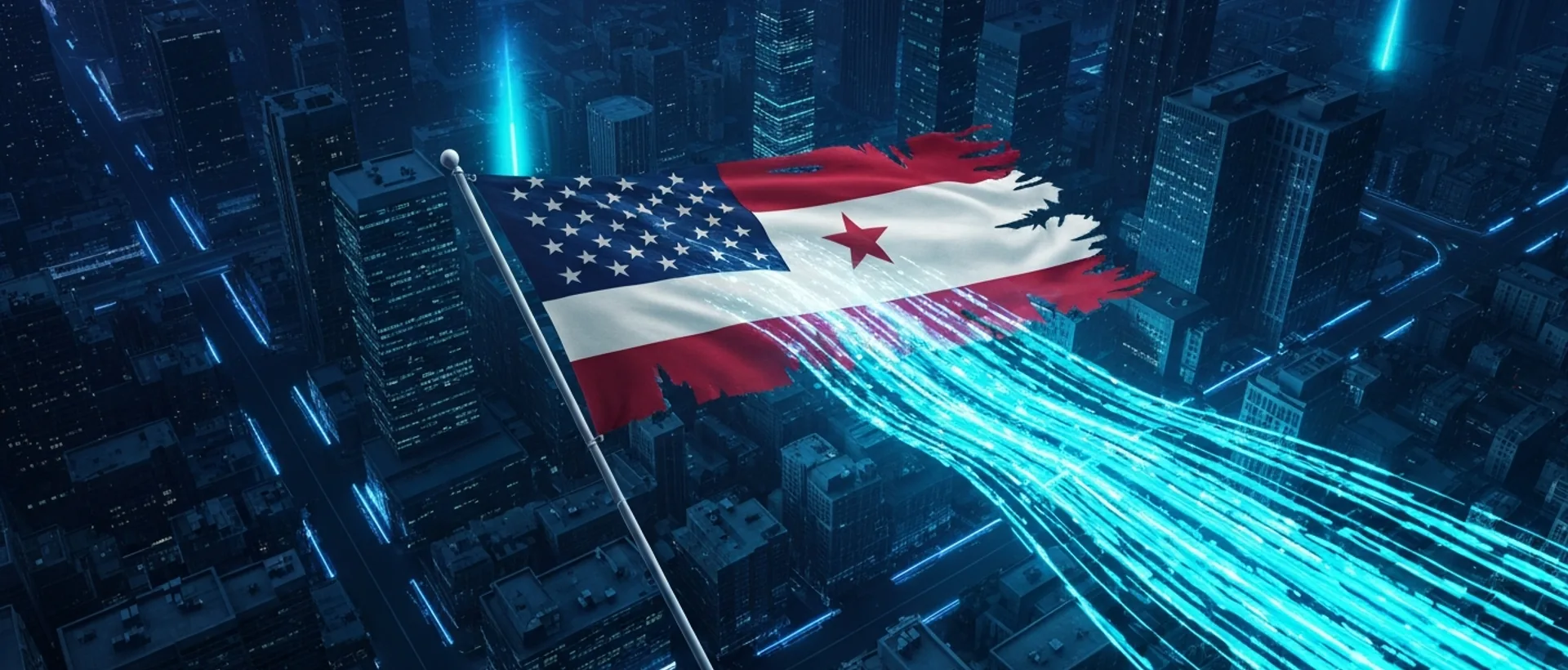
The Inevitable Decline of Proprietary American AI in 2026
Let’s be honest here, folks: the United States’ obsession with proprietary, “American AI,” locked up tight, is turning into a recipe for falling behind. While we argue over who has the most secret and restricted model, the world outside, especially open source, is eating dust and leaving America behind. I know, it’s a bombshell, but someone has to say it.
In March 2026, the White House launched the so-called “National Policy Framework for Artificial Intelligence” (cybersecbrazil.com.br), a bunch of recommendations to balance innovation and security. Looks good on paper, right? But in practice, what we see is the government getting involved where it shouldn’t. In May of the same year, they announced that they would have early access to AI models from giants like Google DeepMind, Microsoft, and xAI before they were released to the public (globo.com, convergenciadigital.com.br).
So, to “protect digital security,” the government needs to be the first to poke around in what companies are creating? That’s not protection, it’s control. And excessive control, my friend, is the kiss of death for true innovation.
The icing on the cake came in June 2026, when President Donald Trump signed an executive order to oversee advanced AI models, all because of concerns about Anthropic’s Mythos (contabeis.com.br). Soon after, the U.S. restricted access to Anthropic’s most advanced models, Fable 5 and Mythos 5, citing national security (contabeis.com.br).
We’re talking about a government that says it wants to innovate, but at the same time puts a bridle on companies that are at the forefront. It’s like wanting your child to be a renowned artist, but forbidding them from painting outside the lines. The result? American AI that, instead of flying, is crawling on a leash. This “security above all else” mentality – which, let’s face it, is often just an excuse to maintain control – is stifling any spark of something truly great. Why so much mystery and restriction if the goal is to be a world leader? This approach negatively impacts American AI, creating a risk-averse environment for startups and even giants, who become afraid to innovate too much and have the government knocking on their door. If you want to understand more about how this regulation hinders progress, take a look at how the AI Technology Impact 2026: Why You’re Wrong! is bigger than it seems.
This pursuit of “proprietary” and “national” AI is a shot in the foot. While the U.S. clings to closed models, with extremely high development and maintenance costs, open-source AI models in 2026 demonstrate an enviable scalability and adaptability. They are poaching talent and ideas, because who wants to work in a bunker when they can collaborate with the whole world? The challenges of proprietary AI in the U.S., such as the cost of proprietary AI and proprietary AI data security, are barriers that the open model simply doesn’t face with the same rigidity. It’s time to admit: why is American AI losing ground? The answer lies in the aversion to collaboration and knowledge sharing. Excessive regulation, although well-intentioned, negatively impacts American AI, creating a risk-averse environment for startups and large companies.
Open AI vs. Proprietary AI: The Undeniable Advantage of Collaboration
Look, there’s no argument: true innovation in 2026 isn’t born in secret laboratories, kept under lock and key. It springs from the synergy of global minds, from that famous “together we are stronger.” It’s a clear benefit of AI collaboration that the proprietary model simply cannot replicate. While proprietary AI struggles to keep its secrets and justify its exorbitant costs, the open-source community is running at full speed, at an unparalleled development pace. It’s continuous improvement, security through public scrutiny, and a democratization of access that we only see in sci-fi movies, but which is real.
AI companies are expected to invest more than US$ 750 billion in 2026 (estadao.com.br). Do you know what that means? It’s like an entire country investing in a single technology. And a large part of that money goes to infrastructure, to fund proprietary AI. Large tech companies like Meta, NVIDIA, and Amazon are significantly expanding their dedicated AI infrastructures (estadao.com.br).
This absurd amount of money is generating fierce competition among U.S. states for investments in data centers (timesbrasil.com.br). It’s not just land, no. It’s energy, it’s water, it’s everything that can sustain these machines thirsty for processing (timesbrasil.com.br). The demand for AI is so high that it’s putting pressure on the prices of chips, specialized labor, and even energy, which the Fed has already cited as a factor pressuring prices (poder360.com.br).
While proprietary AI struggles with maintenance and cost, alternatives to proprietary AI in 2026, such as open models, democratize access and accelerate research in a way we’ve never seen before. Why reinvent the wheel every time if we can use a wheel that has already been tested and approved by thousands? Who cares about the “nationality” of AI when the goal is global advancement? China’s dominance in AI in 2026 will not come from secrets, but from pragmatic adaptation, from taking what works and improving it. The future of AI innovation depends less on patents and more on the ability to build upon others’ work, a philosophy that is inherent to open source. If we don’t have good infrastructure, including for networks, it’s all for nothing. To learn more, check out the article on AI for Unstable Networks 2026: Myths and Realities.
The Price of Arrogance: Costs and Risks of Closed AI
We are paying a high price for the arrogance of thinking that “what’s ours is better” and that secrecy is synonymous with superiority. The cost of proprietary AI is not just financial, no. It’s a cost of lost opportunities, of talent that migrates to where collaboration is valued, and of an ecosystem that, by being closed, ends up stagnant. It’s like trying to have a barbecue without inviting anyone, just to avoid sharing the good steak.
The “not-invented-here” mentality is the biggest obstacle to the challenges of proprietary AI in the U.S., isolating them from global solutions that are already ready and working. Meanwhile, public trust in the government’s ability to regulate AI is very low. Only 31% of Americans trust this regulation (mittechreview.com.br). This is proof that the public sees something is wrong, that the government is more concerned with controlling than fostering.
Fitch Ratings even raised U.S. GDP projections to 1.8% in 2025 and 1.9% in 2026, attributing this growth to private investments in technology and the AI boom (timesbrasil.com.br). But what if this growth could be even greater? What if we were unleashing the full potential of AI instead of stifling it? The truth is that, despite the numbers, there’s a real concern about uncertain financial returns and the risk of a bubble in the sector (mittechreview.com.br). And there’s more: there’s fierce tension between federal regulation and state AI laws, with Trump’s executive order trying to curb state regulation, which could lead to a lot of legal battles in 2026 (mittechreview.com.br). It’s a messy situation that only gets in the way.
For the future of proprietary AI not to be a dead end, a radical paradigm shift is needed, an embrace of sharing and collaboration. It’s time to stop thinking that we will win the “AI race” locked in our own backyard. China, for example, is there showing that it doesn’t care so much about origin, but about effectiveness. And we, here, are discussing who can see what. It’s a weak strategy, not to say pathetic. If you’re thinking about strategies for 2026, it might be good to rethink, as in our chat about AI for Events 2026: Why Your Strategy Is Weak.
The True Path to AI Supremacy: Global Collaboration
In 2026, true strength in AI will not be measured by patents or by how many startups the government managed to snoop on before launch. It will be measured by the ability to integrate and innovate from a vast open-source ecosystem. It’s about building bridges, not walls. It’s about understanding that, even with the AI boom driving economic growth (timesbrasil.com.br), if we don’t know how to share, the price will be high.
China’s dominance in AI in 2026, if it happens, will not be because they are smarter or have more secrets. It will be because they understood the importance of absorbing and adapting, not isolating. They take what works, improve it, and apply it. It’s that simple. Meanwhile, we’re here, afraid that some AI model might “leak” and fall into the wrong hands, as if knowledge were a contagious disease.
“We’re not in a race of who hides best, but of who collaborates fastest. And in that regard, America is losing badly.”
What the future of AI innovation truly demands is an ecosystem mindset, where the benefits of AI collaboration outweigh myopic protectionism. Companies, researchers, and even governments need to understand that AI is too big to be contained in closed boxes. There’s an ongoing debate about whether AI will be inflationary, precisely because of the demand for resources and labor (poder360.com.br). But what if collaboration could optimize these resources? What if we could avoid the duplication of efforts and the unnecessary costs that come with proprietary AI?
We need to stop thinking that “national security” is an excuse for everything. Of course, we need security, but you can’t throw the baby out with the bathwater. Protectionism might seem like a good idea in the short term, but in the long run, it only leaves us behind. It’s time to open our minds, open the code, and open the doors to global collaboration. If we don’t do this, American AI in 2026 will be just another example of how arrogance and fear can hinder progress. And then, my friend, we’ll be left behind, sucking our thumbs, while the rest of the world moves forward.
Sources
- https://www.cybersecbrazil.com.br/post/eua-prop%C3%B5em-novo-marco-regulat%C3%B3rio-para-intelig%C3%AAncia-artificial-com-foco-em-inova%C3%A7%C3%A3o-seguran%C3%A7a-e-li — U.S. proposes new regulatory framework for artificial intelligence focusing on innovation, security, and li ↩
- https://g1.globo.com/tecnologia/noticia/2026/05/05/governo-dos-eua-avaliara-novos-modelos-de-ia-antes-do-lancamento.ghtml — U.S. government to evaluate new AI models before launch ↩
- https://convergenciadigital.com.br/mercado/governo-dos-eua-vai-ter-acesso-previo-aos-modelos-de-inteligencia-artificial-em-nome-da-seguranca-digital/ — U.S. government to have prior access to artificial intelligence models in the name of digital security ↩
- https://www.contabeis.com.br/artigos/77428/governo-dos-eua-restringe-acesso-a-modelos-avancados-de-ia-e-reacende-debate-sobre-dependencia-tecnologica-nas-empresas/ — U.S. government restricts access to advanced AI models and reignites debate on technological dependence in companies ↩
- https://www.estadao.com.br/einvestidor/marcelo-toledo/inteligencia-artificial-ia-investimentos-economia-eua/ — Artificial Intelligence (AI): Billion-dollar investments boost the U.S. economy ↩
- https://timesbrasil.com.br/empresas-e-negocios/ranking-revela-os-estados-mais-preparados-para-a-expansao-da-i-a-nos-eua-veja-quais/ — Ranking reveals the most prepared states for AI expansion in the U.S.; see which ones ↩
- https://www.poder360.com.br/poder-economia/entenda-os-impactos-da-inteligencia-artificial-na-inflacao-dos-eua/ — Understand the impacts of artificial intelligence on U.S. inflation ↩
- https://mittechreview.com.br/guerra-eua-regulacao-ia-2026/ — War in the U.S.: AI regulation in 2026 ↩
- https://timesbrasil.com.br/mundo/explosao-da-ia-faz-fitch-revisar-pib-dos-estados-unidos/ — AI explosion leads Fitch to revise United States GDP ↩
Ready to scale this idea?
Narratron turns topics like this into retention-optimized YouTube scripts in under 2 minutes — magnetic hook, structure, complete SEO, timestamped description and thumbnail prompt ready to ship. 50 free credits, no card required.