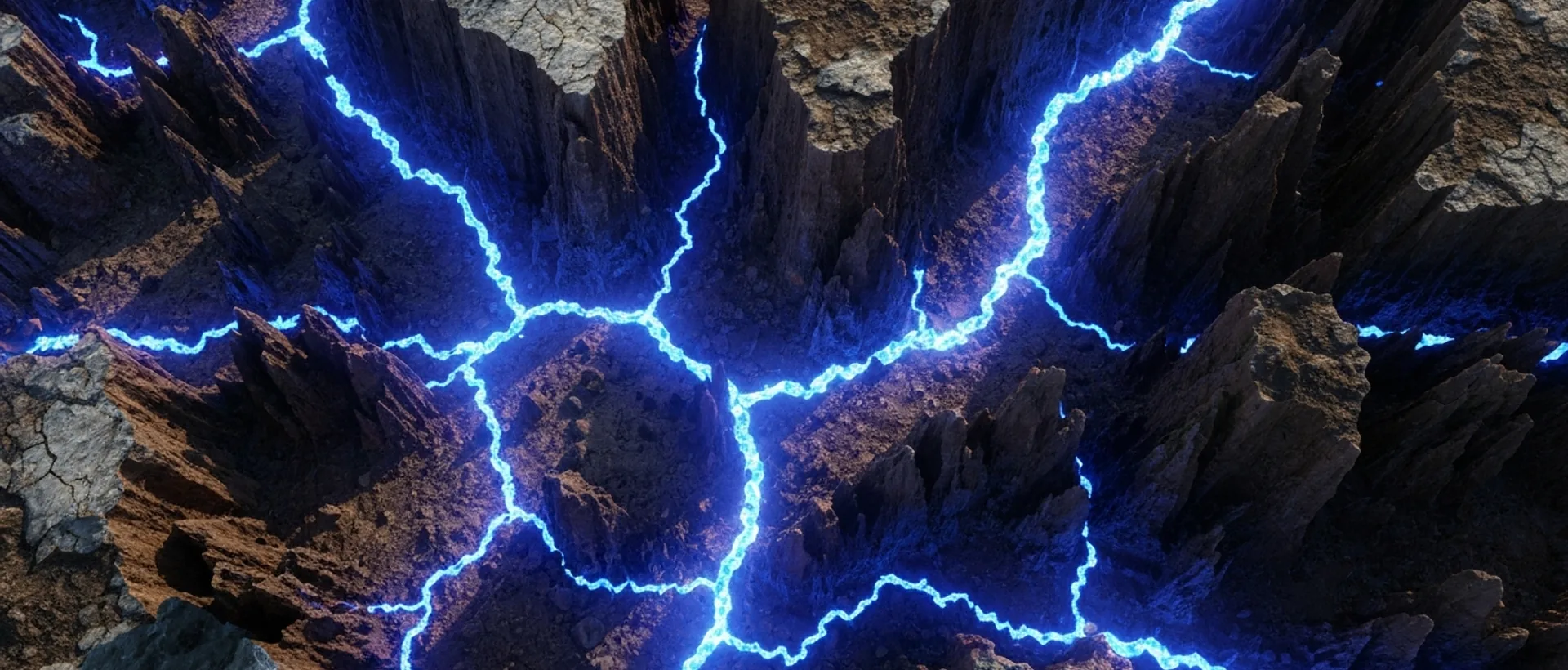
Earthquake Prediction in 2026: Technology’s Unattainable Promise
Hey DavitAI crew! You’ve noticed how much we love a good hype, right? Especially when the topic is technology and a tricky problem we dream of solving. And look, in 2026, the “Holy Grail” of earthquake prediction with artificial intelligence is like the hottest trend. Everyone’s saying AI will give us the power to know exactly when and where the Earth will shake. But, hey, let me be the buzzkill: that’s baloney! Or, at the very least, a huge and dangerous oversimplification.
The plain truth is that earthquake “prediction,” in the sense of knowing with precision the day, time, and location of a seismic event, remains a myth. No matter how many super-intelligent algorithms we throw at the problem. What we truly have are early warning systems that, while a great help, don’t predict. They react. It’s like having a smoke detector that warns you of a fire after it’s already started, not a crystal ball that tells you your neighbor’s grill will catch fire next week.
This obsession with “predicting” quakes, with that fantasy of an “earthquake ChatGPT” that sends you a push notification a week in advance, diverts a lot of energy and valuable resources from solutions we know work. I’m talking about structural reinforcement in buildings, public education on how to act, and efficient evacuation plans. We keep dreaming of the magic warning and forget to tighten the bolts we already have. It’s almost an “AI Technology Impact 2026: Why You’re Wrong!” if we don’t focus on what really matters.
The idea that AI can suddenly pinpoint an imminent earthquake ignores the bizarre complexity of geological processes. The Earth isn’t a chess game where AI can calculate all the moves. It’s a chaotic system, with faults that move in unpredictable ways, pressures accumulated and released on timescales we can barely measure. It’s a simplification that, if embraced uncritically, can give us a false sense of security. And when nature decides to “scream,” as the cliché goes, we might be unprepared, waiting for a whisper that never came.
Seismic Monitoring and AI: The Harsh Reality Behind the Hype
We can’t deny that technology has done a spectacular job in seismic monitoring. Sensor networks are becoming denser, spread across the planet like a nerve network, and the ability to process this tsunami of data in near real-time is mind-blowing. Petrobras, for example, is investing R$ 2.2 billion to install the world’s largest submarine seismic monitoring system in Brazil’s pre-salt layer 2. But, and here’s the plot twist, all of this still doesn’t translate into exact prediction.
AI’s role in this scenario is more that of a super-analyst than a fortune teller. It’s great at taking an absurd amount of seismic data and identifying patterns that the human eye would never see. Research from the University of Texas, for example, managed to develop an AI that predicts earthquakes with 70% accuracy and up to a week in advance, using seismic data from China 1. That’s impressive, of course! But “70% accuracy and up to a week in advance” is still not “100% accuracy and next Tuesday at 2 PM.” It’s a probability tool, not a certainty tool.
Thinking that machine learning will give us the seismic ‘crystal ball’ is a fantasy. It can improve data analysis, but it doesn’t rewrite the laws of geological physics.
Think about it: a 70% chance of an earthquake in a week. Do you evacuate the city? What if it’s a false positive? What if it’s a small earthquake? We don’t have the infrastructure (or the money) to evacuate entire cities every week based on a probability, no matter how high it is. The risk of unnecessary panic and “alert fatigue” is real.
Where AI truly shines is in earthquake early warning systems. Instead of predicting, it accelerates detection and warning after the tremor has already begun. An AI-based tool can predict the risk of secondary quakes in seconds after the initial tremor, with quality comparable to existing models, but at a much faster speed 3. It’s like Japan’s system, operated by the Meteorological Agency, that provides precious seconds before the most destructive seismic waves arrive 4. Seconds to take cover, to stop a train, to shut down an industrial system. That’s technology saving lives, not a prophecy.
The Impact of Technology on Seismic Safety: Where Are We Going Wrong?
In 2026, we should be focusing entirely on resilience, not on prophecies that we know won’t materialize with the precision we’d like. The excessive emphasis on earthquake “prediction” with AI takes our eyes off what really matters: robust infrastructure, rigorous building codes, and evacuation plans that work. You know, the basics done right.
It’s cool that the University of Texas AI reaches 70% accuracy for a week, but that doesn’t change the fact that exact prediction of time and location is still a significant challenge 5. And, let’s be frank, we have a history of being deluded by technology. The narrative that AI will solve the seismic problem is a disservice, creating unrealistic expectations and, worse, leading to complacency. “Oh, AI will warn us, so I don’t need to worry as much about my building’s structure.” That’s why discussing the cost of AI implementation, as in “Discover: AI Cost Technology 2026: Understand the Complexity” (/blog/ia-custo-tecnologia-2026), is so important. It’s not just the financial cost, it’s the social cost of a false sense of security.
The San Andreas Fault, for example, is an area of high seismic tension, but even there, with all the monitoring and top scientists, there is no technology capable of predicting the exact moment of an earthquake 6. It’s a confession of the limits of science, however advanced it may be. And that’s not a problem, it’s a reality we need to accept and work from.
Early Warnings: Where Technology Truly Shines (and AI Helps)
If we stop dreaming of the “future that predicts everything” and focus on the “future that reacts intelligently,” the conversation changes. This is where early warning systems truly shine and AI finds its true purpose in seismology.
Think about Japan. They live under a constant threat of earthquakes and tsunamis. Their early warning system, operated by the Meteorological Agency, is a global example 4. It doesn’t predict the earthquake, but it detects the first seismic waves (P-waves, faster and less destructive) and, within seconds, issues alerts to the population before S-waves (slower and more destructive) arrive. This gives people time to protect themselves, trains to stop, elevators to go to the ground floor. It’s the difference between a disaster and a controlled situation.
Canada also has an early warning system that uses radio, television, and cell phones to transmit alerts simultaneously 7. The idea is to focus on the real impact of phenomena and not on exact prediction. And AI? It comes in to accelerate this detection and analysis process. It can process seismograph data at speeds no human could, identifying the epicenter, magnitude, and arrival time of secondary waves in record time. It’s like AI in the financial market, you know? It doesn’t predict the future, but it analyzes complex data much faster to give an advantage (/blog/ia-mercado-financeiro-2026).
But, not everything is rosy. Even with AI streamlining the systems, there are still enormous challenges. Communication infrastructure in some regions is precarious, making it difficult for the alert to arrive. And there’s the cultural issue: people need to understand the alert, know how to react, and trust the system. If there are too many false positives (those 70% accuracy figures can generate this), people stop taking it seriously. It’s a delicate balance between technology, education, and infrastructure.
The Future of Seismic Safety: Less Hype, More Action
So, what’s the real deal for 2026 and beyond? It’s for us to stop selling the illusion of the “earthquake predictor” and focus on building a more resilient world. Artificial intelligence is a powerful tool, yes, but it isn’t magic. It’s a hammer, not the entire house blueprint.
For Brazilian tech creators and entrepreneurs, the message is clear: instead of chasing the unattainable “Holy Grail” of exact prediction, let’s channel that energy and creativity to where AI can truly make a difference. Think about even more sophisticated monitoring systems, algorithms that optimize disaster response, apps that effectively educate the population, or even AI for designing safer structures. The Brazilian Seismographic Network, funded by the geological service, already monitors seismic activity in Brazil with real-time stations 8. We can supercharge that with AI.
Caution is fundamental, as our brief’s warning points out. We cannot create unnecessary panic or a false sense of security. Ethics in risk communication are as important as the technology itself. You can’t just throw out a “70% chance of earthquake” statistic and expect the population to know what to do.
The future of seismic safety isn’t in an AI that whispers Earth’s secrets with miraculous foresight. It’s in an AI that shouts the alert at the right second, that helps build buildings that don’t collapse, and that empowers communities to protect themselves. We have to be realistic, folks. The Earth is a living, complex organism, and as much as we want to dominate its moods, scientific humility is still our best friend. And, between us, a building that doesn’t collapse is much more useful than an app that warns you it might collapse, right?
Sources
- https://tecnoblog.net/noticias/nova-ia-preve-terremoto-com-uma-semana-de-antecedencia/ — New AI predicts earthquake a week in advance ↩
- https://clickpetroleoegas.com.br/petrobras-investe-22-bilhoes-de-reais-para-instalar-o-maior-sistema-de-monitoramento-sismico-do-mundo-no-fundo-do-mar-com-460-quilometros-de-cabos-que-funcionam-como-um-ultrassom-do-p-mhbb01/ — Petrobras invests R$ 2.2 billion to install the world’s largest submarine seismic monitoring system on the seabed, with 460 kilometers of cables that function like a pre-salt ultrasound ↩
- https://www.tempo.pt/noticias/ciencia/ferramenta-de-previsao-de-terremotos-baseada-em-ia-preve-sismos-secundarios-em-segundos.html — AI-based earthquake prediction tool predicts secondary quakes in seconds ↩
- https://www.correiobraziliense.com.br/aqui/2026/04/02/como-o-japao-usa-a-tecnologia-para-se-proteger-contra-terremotos/ — How Japan uses technology to protect itself against earthquakes ↩
- https://www.gazetadopovo.com.br/mundo/o-desafio-de-prever-terremotos-dyey3nxbvvcbczx3elbk43rri/ — The challenge of predicting earthquakes ↩
- https://diariodopara.com.br/cotidiano/falha-de-san-andreas-atinge-nivel-critico-de-tensao-para-terremoto-e-preocupa-cientistas-para-impacto-mundial/ — San Andreas Fault reaches critical tension level for earthquake and worries scientists about global impact ↩
- vietnam.vn — Disaster early warning system: What can be learned from the experience of Canada and UNDP ↩
- https://www.youtube.com/shorts/WH4vlJzXU0o — Brazilian Seismographic Network: monitoring seismic activity in Brazil ↩
Read next
- Impacto IA Tecnologia 2026: Por Que Você Está Errado!
- Taxas Hipoteca Brasil 2026: A Verdade Ignorada
Read next
- AI & LGPD Brazil 2026: Challenges & Opportunities
- Tech Concepts Explained Fast: Your Essential Guide 2026
Ready to scale this idea?
Narratron turns topics like this into retention-optimized YouTube scripts in under 2 minutes — magnetic hook, structure, complete SEO, timestamped description and thumbnail prompt ready to ship. 50 free credits, no card required.