What is Edge AI in Mobile Devices and Why Is It Important in 2026?
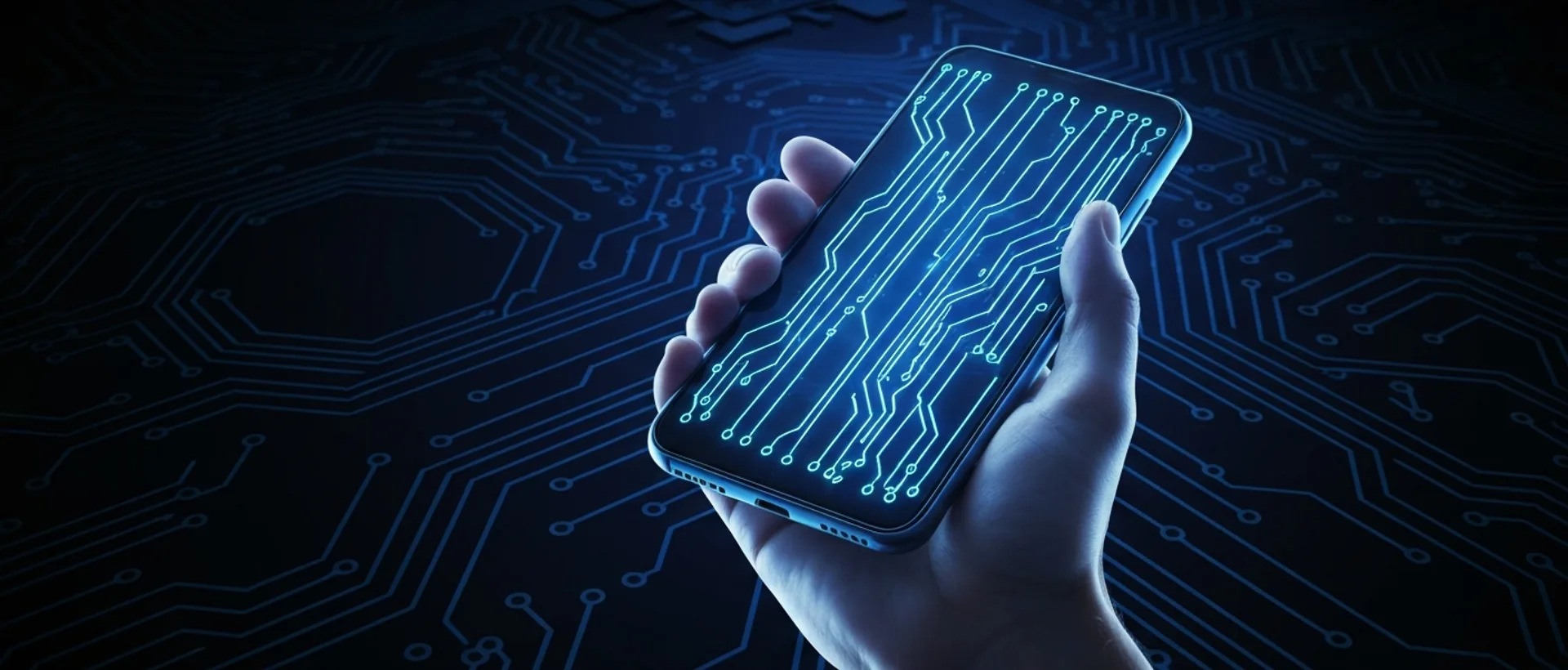
Edge AI in mobile devices 2026 is the ability of a device, whether a smartphone, tablet, or even a wearable, to process artificial intelligence algorithms directly on itself, without needing to send data to the cloud. Forget the idea that AI requires supercomputers in distant data centers; in 2026, your phone will be the brain of the operation. This approach isn’t just a tech fad; it becomes crucial for ensuring your privacy, reducing latency, and unlocking functionalities that were previously unthinkable.
The importance of all this is that your phone can solve complex AI tasks in real time, like facial recognition that unlocks your device in milliseconds, a voice assistant that understands your Northeastern accent without stumbling, or image analysis that improves your photo even before you see it. This not only greatly enhances your user experience but also opens up a sea of new mobile Edge AI applications that we can’t even imagine today. I confess that, at first, I thought it was just a fancy way of saying “local processing,” but there’s a lot more to it than meets the eye.
The mobile Edge AI benefits are clear: your data is more secure because it doesn’t leave your pocket, you depend less on that Wi-Fi that keeps dropping or the 4G that disappears in the tunnel, and the battery, believe it or not, can even last longer if well optimized. It’s a fundamental pillar for the next wave of digital interactions, where everything is more personal, faster, and more responsive. It’s like having a supercomputer in your pocket, but one that still fits in your fanny pack.
The autonomy that on-device AI processing brings is a significant differentiator. Think of a translation app that works perfectly even when you’re in the middle of the Amazon, without a signal. Or a game that adapts difficulty to your movements without needing a connection. This ability to function intelligently and independently, even without internet, is what makes Edge AI in mobile devices 2026 so revolutionary.
How Edge AI Works in Smartphones and Its Key Benefits
So, how does this magic happen? Edge AI in smartphones works with a combination of specialized chips, which we call NPUs (Neural Processing Units), and software that is tailor-made to run AI models in a super-efficient way on your phone’s hardware. It’s a striking difference from Cloud AI, where all the computational brute force resides in remote servers. Think of it as having a private chef in your kitchen, instead of ordering everything for delivery from a restaurant miles away.
The main mobile Edge AI benefits include a drastic drop in latency. Your data doesn’t need to travel to the cloud, take a detour, and return to your device. For applications that require immediate responses, like augmented reality that turns your living room into a soccer field or voice assistants that understand your command instantly, this is vital. No more of that annoying delay that makes us give up on using the feature.
Edge AI device privacy also gets a boost. Since the most sensitive data remains on your device, the chances of leaks or someone prying into your life significantly decrease. It’s like keeping your diary under the mattress, instead of sending it to a public vault. I, who have had my data exposed in a leak out there, highly value this extra layer of security.
Another positive point is that Edge AI demands less from your internet. This frees up bandwidth for other things, and your phone’s overall performance improves. Edge AI optimization for mobile also helps save battery, because local processing, when done well, consumes less energy than constantly sending and receiving data from the cloud. It’s a win-win.
[!STAT] 75% Of new high-end smartphones in 2026 will have dedicated NPUs.
Practical Applications and Examples of Edge AI in Daily Life in 2026
In 2026, mobile Edge AI applications will be everywhere, as common as a ‘TGIF’ meme on WhatsApp. Examples of Edge AI in daily life include our smartphones’ cameras that intelligently adjust everything automatically to take incredible photos and videos, even in terrible lighting conditions. Facial recognition for unlocking your phone, which is already good, will become even more secure and faster. And those augmented reality filters, which are already fun, will become out of this world, interacting much more naturally with the environment.
Voice assistants like Siri and Google Assistant will become smarter and have a more relatable personality. They will process complex commands locally, better understanding the context and nuances of our speech. This means less “sorry, I didn’t understand” and more “Ah, I get it! Do you want me to call your cousin Zeca to ask for the feijoada recipe?”. All this on-device AI processing will make the experience much smoother.
There’s also health monitoring in wearables, which will analyze your sleep, heart rate, and physical activity without dumping your sensitive data into the cloud. And real-time language translation, which will work offline, perfect for that international trip where you don’t want to rely on an expensive data plan. You know when you try to order a pão de queijo in another country and no one understands? Your problems are over!
Mobile games will also benefit tremendously. Think of more realistic graphics, non-playable characters (NPCs) that act more intelligently and unpredictably, and immersion that makes you forget you’re playing on a phone. Edge AI optimization for mobile is crucial here for everything to run smoothly, without freezes, and so the battery doesn’t die in the middle of that most important level.
Current and Future Challenges of Mobile Edge AI until 2026
Despite all this promise, mobile Edge AI challenges are still real and persistent. Edge AI optimization for mobile is a tricky balancing act. You need to balance performance, power consumption, and the size of the AI model. If the model is too large, it can overload the phone’s hardware and, honestly, drain the battery quickly. Nobody wants a phone that dies before lunch, right?
Another pickle is hardware fragmentation, especially in the Android universe. There are phones with Qualcomm chips, others with MediaTek, Samsung, and so on. Each with its NPU and its peculiarities. Ensuring that an AI model works well on all these devices is a huge challenge for developers. It’s almost like having to write the same samba in several different rhythms, and all of them have to sound perfect.
The Edge AI battery impact is a constant concern. Yes, Edge AI can be more efficient than Cloud AI for certain tasks, but if you run complex models all the time, the battery will go to hell. We need more innovations in hardware and software so that AI can work hard without turning the phone into a discharged paperweight.
The security and integrity of AI models on the device itself are also crucial points. How to ensure that a model has not been tampered with or that it will not operate in a biased way? Protecting this local intelligence and ensuring it is fair is fundamental for us to truly trust our devices. If the AI starts glitching or making strange decisions, trust quickly disappears.
Edge AI vs. Cloud AI: A Detailed Comparative Analysis in 2026
The clash between Edge AI vs Cloud AI isn’t really a clash, but rather a partnership in 2026. Cloud AI has virtually unlimited computational firepower and gigantic AI models, perfect for training algorithms and for tasks that don’t require an immediate response. Its problem is latency and the dependence on good and constant internet, which, let’s face it, is still a luxury in many parts of Brazil.
Edge AI, on the other hand, prioritizes speed, your privacy, and energy saving. It is the ideal choice for when you need real-time inference, for personalizing things on your device, and for situations where the internet signal is weak or nonexistent. Think of Cloud AI as the symphony orchestra, and Edge AI as that forró trio that plays in the square, directly for the public, without needing large infrastructures.
In 2026, the strongest trend is a hybrid architecture, where Edge AI and Cloud AI work together, like a well-tuned soccer team. Fast tasks that require privacy, like facial recognition, stay on your device. Meanwhile, model training and the analysis of a lot of data (the famous big data) happen in the cloud. It’s a synchronized dance that promises the best of both worlds.
This synergy makes our phones smarter and more independent, but still benefiting from the learning capacity and constant updates that the cloud offers. It’s the natural path for the future of Edge AI in mobile, where we have the power in our hands and the intelligence of the cloud behind the scenes.
[!YOUTUBE] QXuvUW4B7jU What is Edge AI?
| Characteristic | Edge AI | Cloud AI |
|---|---|---|
| Latency | Low | High |
| Data Privacy | High (local processing) | Medium (data goes to servers) |
| Network Dependency | Low | High |
| Battery Consumption | Variable (can be optimized) | Low (on device), High (data transfer) |
| Processing Power | Limited (by device hardware) | Unlimited (scalable on servers) |
| Cost | Initial hardware on device | Cloud operational cost (subscriptions) |
Trends and the Future of Edge AI in Mobile in 2026
Edge AI trends 2026 point to a scenario where we will see increasingly powerful and efficient NPUs within our phone chips. This means that Edge AI in mobile devices 2026 will no longer be a high-end device feature, but rather a standard capability in virtually every smartphone, from mid-range to premium. It will be as common as having a good camera.
We will see a huge advance in how AI models are compressed. Complex algorithms, which today take up a lot of space, will run with a much smaller memory “footprint” and with an almost imperceptible Edge AI battery impact. Accuracy, of course, cannot drop. It’s like having a race car that fits in a Beetle’s parking spot and still gets 20 km per liter.
The future of Edge AI in mobile also involves the standardization of APIs and tools for developers. Today, it’s a bit messy, with each manufacturer doing it their own way. But the idea is to make it easier for people to create applications that take full advantage of on-device AI processing. This accelerates innovation and gives us more cool functionalities.
Collaboration between hardware manufacturers (like Qualcomm, Samsung), software developers (Google, Apple), and cloud service providers (AWS, Azure) will intensify. The idea is to create a more unified and innovative ecosystem for mobile Edge AI. It’s no longer every man for himself, but rather everyone together to deliver an experience we didn’t even dream of a few years ago. It’s teamwork, like a samba school preparing for Carnival, where every component is essential.
[!CALLOUT tipo=“dica”] Keep an eye on announcements for new mobile chipsets. NPU (Neural Processing Units) specifications will be a significant differentiator for those seeking the best Edge AI performance in the coming years.
Maximizing Potential: Tips for Developers and Consumers
For developers, focusing on Edge AI optimization for mobile is the big insight. Using frameworks like TensorFlow Lite and Core ML is basic. But the real trick of the trade lies in quantization and model pruning techniques. This means making the algorithms “leaner” and more efficient, reducing size and resource consumption. It’s like squeezing water from a stone, but in a way that works and saves battery.
Leveraging the characteristics of each NPU and testing the app on several different phones is crucial. There’s no point in creating a model that only runs well on your latest generation iPhone and crashes on the most popular Android. Ensuring that mobile Edge AI applications work for the majority is what will make the difference. It’s tedious work, I know, but it’s necessary to avoid user frustration.
As for us, consumers, the tip is to look for devices that come with chips that have dedicated NPUs. They are designed for this and deliver the best performance for Edge AI. Keeping an eye on the smartphone’s AI specifications can be what separates an “ok” phone from a “wow” one. It’s not just more RAM or a camera with more megapixels that matters now.
And, of course, keeping an eye on app permissions and understanding how your data is processed, locally or in the cloud, is fundamental to maintaining your Edge AI device privacy. Developer transparency is key. If the app isn’t clear about this, it’s already a red flag. Edge AI in mobile devices 2026 is a powerful tool, and like any tool, it needs to be used wisely.
Q: What does Edge AI mean in mobile devices?
A: Edge AI in mobile devices refers to the execution of artificial intelligence algorithms directly on the device, such as smartphones or tablets. This allows for local data processing, without relying on cloud servers, ensuring greater speed and privacy.
Q: What are the main benefits of Edge AI for mobile phones in 2026?
A: The main benefits include reduced latency for instant responses, greater user data privacy, less reliance on network connectivity, and optimized battery consumption. These advantages significantly improve user experience and security.
Q: How does Edge AI affect data privacy on smartphones?
A: Edge AI enhances data privacy by processing sensitive information directly on the device, without sending it to the cloud. This minimizes the risk of leaks and ensures that data remains under the user’s control, strengthening personal security.
Q: Will Edge AI replace Cloud AI in mobile devices?
A: No, Edge AI will not replace Cloud AI, but rather complement it. In 2026, the trend is towards a hybrid architecture, where Edge AI handles real-time and privacy-sensitive tasks on the device, while Cloud AI manages model training and the processing of large volumes of data.
Q: What are some practical examples of Edge AI in daily life?
A: Practical examples include facial recognition for screen unlocking, real-time camera enhancements for photos and videos, more responsive and personalized voice assistants, and offline language translation. These applications are already present and will deepen by 2026.
Ready to scale this idea?
Narratron turns topics like this into retention-optimized YouTube scripts in under 2 minutes — magnetic hook, structure, complete SEO, timestamped description and thumbnail prompt ready to ship. 50 free credits, no card required.