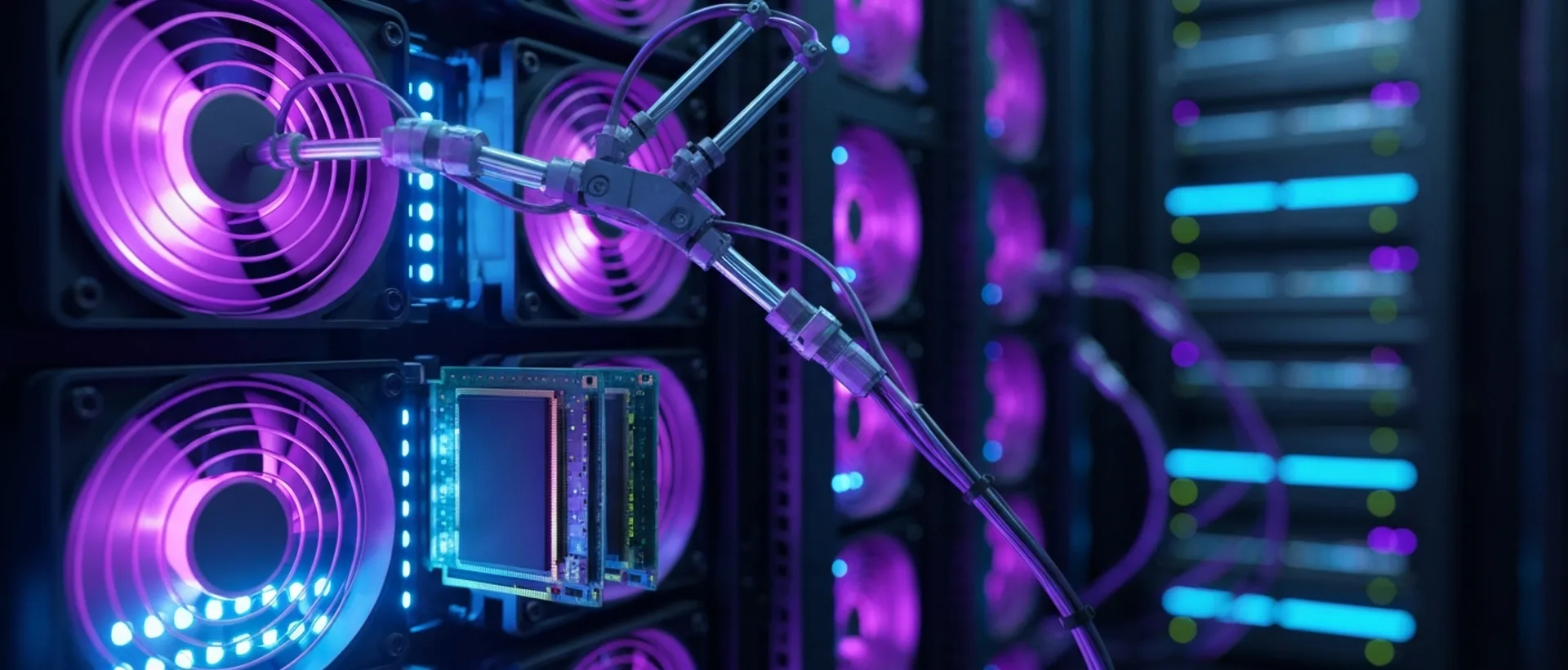
Meta RAM 2026: An “Ingenious Workaround” or the Raw Reality?
Hey there, tech and entrepreneurship folks! Get ready, because we need to talk about Meta and their latest move that’s got everyone buzzing. You know that story about “RAM reuse” in state-of-the-art servers? Well, Meta is beating its chest and claiming it’s the pinnacle of sustainability and innovation. But, listen, here at DavitAI, we don’t just swallow any marketing hype without a good investigation first.
The company announced that, by June 30, 2026, they would have a customized chip, the “Vistara”, which allows for something almost magical: stuffing old DDR4 memory from old servers into brand-new machines that, by nature, would only accept DDR5 1. It sounds like an ingenious workaround, doesn’t it? Like when you manage to use an old charger with a new phone. Meta swears up and down that this idea reduces the need for new servers for AI inference workloads by 25% 2. That’s a significant number, but we have to ask: is it just for sustainability or is there a rabbit hidden in that hat?
My take is that this “Meta RAM reuse” isn’t as innovative as it first appears. Refurbishing and revalidating memory modules is already something the industry does, just on a smaller scale. The novelty here is the scale of the business and, of course, the marketing surrounding it. The “Meta customized server chip” is undoubtedly the engine of this strategy, allowing for more granular memory management. But what about the hidden costs? Is Meta being transparent about the engineering work, testing, and time this requires? Or is it just another greenwashing cover to optimize costs under the pretext of being “E-S-G” (Environmental, Social, and Governance)? I’m left wondering if Uncle Mark isn’t more concerned with the company’s balance sheet than with its carbon footprint.
The strategy of reusing DDR4 memory in state-of-the-art servers isn’t just a technical trick. It’s a financial and strategic move that puts Meta in a position of greater control over its supply chain and, who knows, even over the future of the RAM market. Are we seeing a “workaround” or a checkmate on the AI chessboard?
The Recycling Show: Behind Meta’s Scenes
Let’s get to the technical details, because that’s where we uncover some truths. Meta’s servers now combine 768 GB of DDR5 RAM with 256 GB of recycled DDR4, totaling 1 TB of capacity per server 3. This is done through CXL (Compute Express Link), a technology that allows different types of memory to work together. It’s like putting a patched tire on a new car; it works, but is it ideal? DDR4 is, by nature, slower than DDR5. Meta claims it optimized hardware and software to mitigate latency issues 5, but the long-term impact on truly heavy AI workloads is still an unknown.
I confess that, as a tech journalist, the idea of extending component lifespan appeals to me. It’s a nod to sustainability. But we can’t forget that Meta is a billion-dollar company, and the scarcity and high price of DDR5 must have factored into the decision. In 2026, Meta plans to spend between US$115 billion and US$135 billion on capital expenditures, with a huge focus on AI infrastructure 9. With all that money flowing, any savings at the margin is profit.
This “Meta optimized RAM cost-benefit” story is what drives the whole thing. They argue that they reduce expenses, and yes, reducing the number of servers by 25% for AI inference is a significant saving 2. But the complexity of managing this mix of memories, the development of the Vistara chip 4 and the engineering to make everything work without bottlenecks, comes at a price. Is it possible that, in the end, the difference isn’t that great, and the main gain is more control over the supply chain? The “Meta customized RAM advantages” are clear for them: less dependence on external suppliers and proprietary technology that differentiates their data centers. But for us, users and developers, the benefits are more diffuse.
We can’t forget that Meta, on June 24, 2026, closed a multi-year agreement with Qualcomm to deploy its data center technologies, including C1000 CPUs with 43TB of DRAM, with samples expected for fiscal year 2026 10. This shows that, while they “recycle” on one side, they are investing heavily in cutting-edge technology on the other. It’s a game of chess, my friend, and we’re here to try and understand the next move.
The Mega-Expansion and the Environmental Bill: A Striking Contrast
While Meta talks about “reuse” and “sustainability” with RAM, we see the company investing heavily in data center expansion, and this raises some hairy environmental questions. On July 9, 2026, Meta announced a US$9 billion investment to build the company’s largest data center outside the United States, in Canada, in the province of Alberta 6. Nine billion! That’s not pocket change, is it? And the most curious thing is that this mega data center will be powered by a natural gas plant and will use a closed-loop cooling system, without relying on local water sources 7.
“Meta is in an AI arms race. The RAM ‘sustainability’ is a convenient narrative, but the scale of its new data centers suggests that resource consumption will only increase. We need to look at the full picture.”
In Texas, Meta isn’t kidding around either. The company expanded its investment in a US$1.5 billion data center to a staggering US$10 billion, with plans to reach 1 gigawatt of capacity by 2028 8. And there’s more: on June 5, 2026, we learned that Meta is building data centers in tent structures in Ohio, which promise to halve construction time and be powered by modular off-grid power plants 11. Man, data center in a tent! It’s like setting up a tech circus.
This “Meta data center innovation” is real, yes, but what seems to be an advance for the planet, in reality, primarily serves the corporate interests of a tech giant. The claim that “Meta reduces server energy consumption” is a convenient mantra, but without external data and independent audits, it’s difficult to validate the true magnitude of these savings, especially when compared to the energy spent to build and operate these data center monsters. It’s like saying you saved on gas for your car, but then bought a new truck. Meta is in a race to build the world’s most powerful AI infrastructure, and the environmental bill is gigantic.
If you’re interested in how technology can impact the environment, it’s worth checking out AI Environment 2026: Technology and Sustainability, because the discussion is much more complex than it seems.
Meta and the Closed Future: Control, Profit, and the Shadow of the Cloud
The “Meta server hardware future” points to an increasingly closed ecosystem. The company dictates the rules of the game, from “what is Meta’s customized chip” to memory management. The question “why Meta reuses RAM” has a twofold and very clear answer: economy and control. It’s more about optimizing its own profit and ensuring the exclusivity of its technology than a genuine environmental crusade. Meta needs AI computing capacity like one needs air, and the cost of building this from scratch is astronomical. Reusing DDR4 is a way to have more RAM, faster and cheaper, to feed its hunger for AI.
And there’s a detail we can’t ignore. With all this investment and this insane AI computing capacity they are building, there’s a possibility that Meta will have excess capacity. And what does a company do with excess capacity? Sells it! Some say that Meta may be preparing to offer access to this capacity as a cloud service, like AWS or Azure 12. Just imagine: Meta, which already dominates social media and is investing heavily in the metaverse, also becoming an AI infrastructure provider. That would be a game-changer, and perhaps the real play behind all of this.
This “Meta server memory optimization” strategy is a reflection of how big tech operates. They’re not an NGO, are they? Every move, every “innovation,” is calculated to maximize its market position and financial results. Sustainability is a bonus, a good item for the annual report, but not the primary goal. It’s a game of billions of dollars, and Meta is playing to win.
If you’re thinking about how this AI race might affect the market and businesses, it’s worth checking out Discover: Meta Stocks 2026: Detailed Analysis and Forecasts, to understand the financial implications of these moves.
The Reality Behind the Hype: What Does This Mean for Us?
So, what does this whole Meta story and its “ingenious workaround” mean for us, creators and entrepreneurs? It means we need to be more skeptical. It’s not because a large company announces a “sustainable innovation” that it is acting purely out of altruism. In the world of technology, especially with AI setting the pace, every decision is strategic. Meta is in an AI capacity arms race, and this RAM reuse is just one piece in this giant puzzle.
It demonstrates creative engineering, that’s undeniable. But it also exposes the pressure for costs and the quest for total control over the supply chain and infrastructure. For your business, whether you’re a developer, a content creator, or an entrepreneur, this shows that innovation often arises from necessity and financial pressure, not just an idealistic vision. Keep an eye out, because what Meta does today could be the norm (or the opportunity) of tomorrow.
And, to close, we always need to question: what is truly sustainable? Is it reusing a small part of a component while building giant data centers that consume rivers of energy? Or is it rethinking the consumption model as a whole? The answer, my friend, isn’t as simple as a “Vistara” chip. It’s a debate that goes far beyond RAM boards.
Sources
- https://canaltech.com.br/hardware/crise-apertou-meta-recicla-memorias-antigas-em-servidores-de-ultima-geracao/ — Crisis hit? Meta recycles old memories in state-of-the-art servers ↩
- https://www.tudocelular.com/android/noticias/n257578/meta-ai-volta-a-usar-ram-ddr4-evitar-crise.html — Meta AI returns to using DDR4 RAM to avoid DDR5 price crisis ↩
- https://wproo.com/2026/07/08/meta-reaproveita-memorias-ram-antigas-em-novos-servidores-com-chip-de-ponte-personalizado/ — Meta reuses old RAM memories in new servers with custom bridge chip ↩
- https://www.hardware.com.br/noticia/meta-ddr4-resolver-problema-servidores/ — Meta creates chip to leverage DDR4 RAM in state-of-the-art servers ↩
- https://abertoatedemadrugada.com/2026/06/meta-cria-chip-para-aproveitar-memoria.html — Meta creates chip to leverage DDR4 RAM in state-of-the-art servers ↩
- https://exame.com/inteligencia-artificial/meta-anuncia-a-construcao-de-centro-de-dados-de-us-9-bilhoes-no-canada/ — Meta announces construction of US$9 billion data center in Canada ↩
- https://www.noticiasaominuto.com/tech/3018782/meta-investe-8-mil-milhoes-em-maior-centro-de-dados-de-ia-fora-dos-eua — Meta invests 8 billion in largest AI data center outside the US ↩
- https://itforum.com.br/noticias/meta-amplia-aposta-em-infraestrutura-de-ia/ — Meta expands bet on AI infrastructure ↩
- https://www.mmcginvest.com/post/meta-data-centers-inside-the-600-billion-infrastructure-gamble-reshaping-america — Meta Data Centers: Inside the $600 Billion Infrastructure Gamble Reshaping America ↩
- https://www.forbes.com/sites/karlfreund/2026/06/24/qualcomm-lays-out-new-data-center-roadmap-for-ai-meta-buys-it/ — Qualcomm Lays Out New Data Center Roadmap For AI, Meta Buys It ↩
- https://kalinga.ai/meta-tent-data-centers-2026/ — Meta’s Tent Data Centers: A Look at the Future of AI Infrastructure ↩
- https://www.pcgamer.com/software/ai/meta-will-need-to-reduce-or-possibly-stop-ai-investment-in-datacenters-as-it-already-has-excess-capacity-the-ai-infrastructure-bubble-feels-the-heat/ — Meta will need to reduce or possibly stop AI investment in datacenters as it already has excess capacity, the AI infrastructure bubble feels the heat ↩
Read next
- Descubra: IA para Redes Instáveis 2026: Mitos e Realidades
- GPT-5.6 inteligência artificial 2026: realidade ou mito?
Ready to scale this idea?
Narratron turns topics like this into retention-optimized YouTube scripts in under 2 minutes — magnetic hook, structure, complete SEO, timestamped description and thumbnail prompt ready to ship. 50 free credits, no card required.