Social Media Addiction 2026: The Farce of Digital Connection
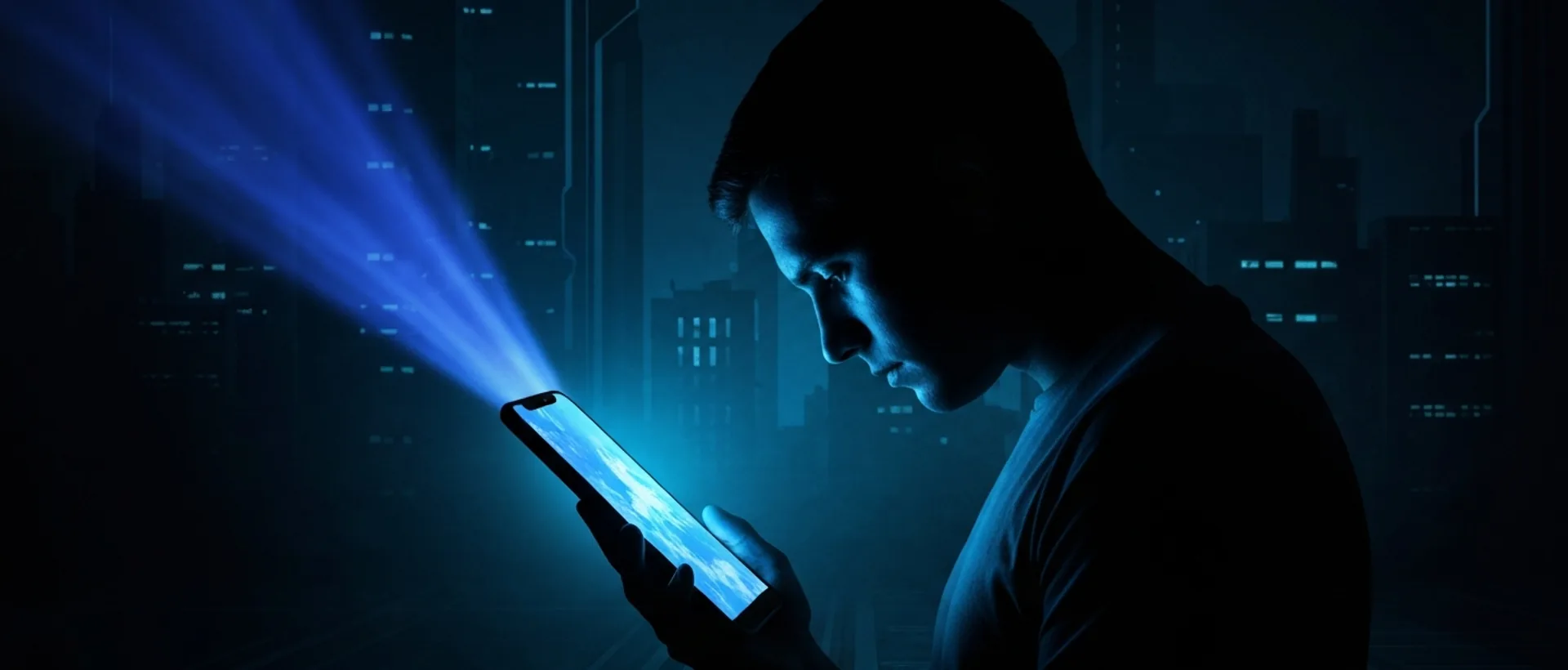
In 2026, talking about “social media addiction” is almost a euphemism. The raw truth is that we’re not dealing with an individual weakness or lack of willpower, but rather with sophisticated behavioral engineering. Platforms weren’t made to connect you; they were designed to trap you, exploiting dopamine and social networks with surgical precision. The ‘addiction’ narrative conveniently serves to divert focus from the responsibility of those who profit from our attention.
What we call addiction is the direct result of algorithms and designs intentionally created to suck up every second of your time, directly impacting digital well-being 2026. It’s like fighting a team of engineers, psychologists, and neuroscientists who work to keep you glued to the screen. We’re not on equal footing here. The big question is: are we going to keep accepting this business model that rakes in high profits while we disconnect from real life?
It’s Not Addiction, It’s Behavioral Engineering
The so-called “digital fracking” is the predatory mining of our attention. It’s a term that describes how platforms use intrusive and addictive techniques to incessantly extract data and engagement. It’s not your weakness; it’s an unequal battle against an army of intelligent people who study you. They know exactly what makes you come back, what gives you that dopamine spike.
That’s why we feel guilty, but keep scrolling the feed. Companies don’t sell products; they sell your attention, your anger, your envy, your validation. And we, like fools, buy into this idea that we ‘need’ to be connected. I myself have fallen for this many times, promising I’d just ‘take a quick look’ and losing an hour of my life. It’s a well-made trap, and we need to stop pretending it’s not.
The Devastating and Underestimated Effects of Excessive Use
The effects of excessive social media use go far beyond procrastinating a workday. They erode our ability to concentrate, leaving us with the attention span of a goldfish. They alter our perception of reality, making us compare our ‘unfiltered’ lives with the perfectly curated lives of others. It’s no wonder that the impact of social media on mental health is one of the main drivers of anxiety and depression, especially among the younger generation.
The constant search for online validation distorts self-esteem in ways we don’t even realize. A ‘like’ becomes a certificate of worth, and its absence, a certificate of failure. It’s a vicious cycle: dissatisfaction leads to more screen time, seeking validation that never fully arrives.
“Digital fracking is the predatory mining of our attention. Platforms don’t sell products, they sell you.”
Recent research shows an exponential increase in mental health disorders among young people, and ignoring this is neglecting a public health crisis. We’re creating a generation that prefers the screen to eye-to-eye conversation, the avatar to the real person. This is unhealthy, and we need to react. I, for example, have experienced feeling bad seeing the ‘perfect lives’ of others. It’s a trap.
The Real Impact on Mental Health
Think with me: how many times have you felt down after spending time on Instagram or TikTok? That’s because the architecture of these networks is made for that. They show you what irritates you, what makes you feel inferior, what keeps you scrolling. It’s a factory of comparison and dissatisfaction. And the way out isn’t to be ‘stronger,’ but to understand how the game is played.
For me, the worst part isn’t the lost time, but the mental energy that drains away. We get exhausted, but we haven’t done anything productive. Just consumed and compared.
Counter-Strategies to Reclaim Your Time and Mind
To break free from phone addiction, the first thing is to stop thinking that platforms are your friends. They’re not. They are companies that need your time to survive. How to do a digital detox? It starts with a 24-hour ‘fast’. Turn everything off, put your phone in a drawer, and don’t tell anyone. Anxiety will hit, but that’s when the magic happens. You’ll rediscover the world.
Implement ‘digital silence zones’ at home. At the dinner table, in the bedroom, before sleeping: phones are forbidden. Seriously, it’s liberating. Yes, use apps to control usage time, but don’t blindly trust them. They are a tool, not the solution. The solution is within you.
- Rediscover analog hobbies: Reading, gardening, cooking, playing an instrument.
- Reconnect in person: Call a friend, visit family, go for coffee without looking at your phone.
- Exercise and create: A walk in the park is worth more than 1000 likes.
Sério, depois que comecei a deixar o celular longe da mesa na hora do almoço, minhas conversas com a família melhoraram 100%. A gente até ri de novo. #DesintoxicaçãoDigital
— @umleitorqualquer no Threads
Treating internet addiction involves re-educating your brain. Instant gratification is the most potent bait they have. Deactivate most notifications. You don’t need to know the moment someone liked your photo or sent you a meme. Your brain will thank you. It’s annoying at first, but then you realize that life goes on, and better, without that constant beep.
The Future of Digital Well-being: A Continuous Struggle
In 2026, the battle for digital well-being won’t be won by some new feature platforms invent to ‘help’ you. That’s an illusion. Victory comes from our awareness and individual and collective resistance. True digital freedom is choosing when and how we engage, instead of being puppets of algorithmic feeds. It’s necessary to question ‘why social media is addictive’ and, more importantly, how it’s addictive.
The future isn’t about abandoning technology and becoming a hermit. It’s about mastering its use, transforming it into a useful tool, and not a cruel master. This requires a conscious and constant effort, like caring for a plant. Digital detox isn’t a one-time event; it’s a continuous process of vigilance and strategy adjustment to reduce screen time. It’s ensuring that our real life isn’t just a blurred backdrop for the glowing screen.
After all, who wants to reach 2026 looking back and realizing they spent their entire life browsing the lives of others? The ‘social media addiction 2026’ will only continue to be a farce if we let it. Real life is out here, waiting for us to disconnect to live it.
Ready to scale this idea?
Narratron turns topics like this into retention-optimized YouTube scripts in under 2 minutes — magnetic hook, structure, complete SEO, timestamped description and thumbnail prompt ready to ship. 50 free credits, no card required.