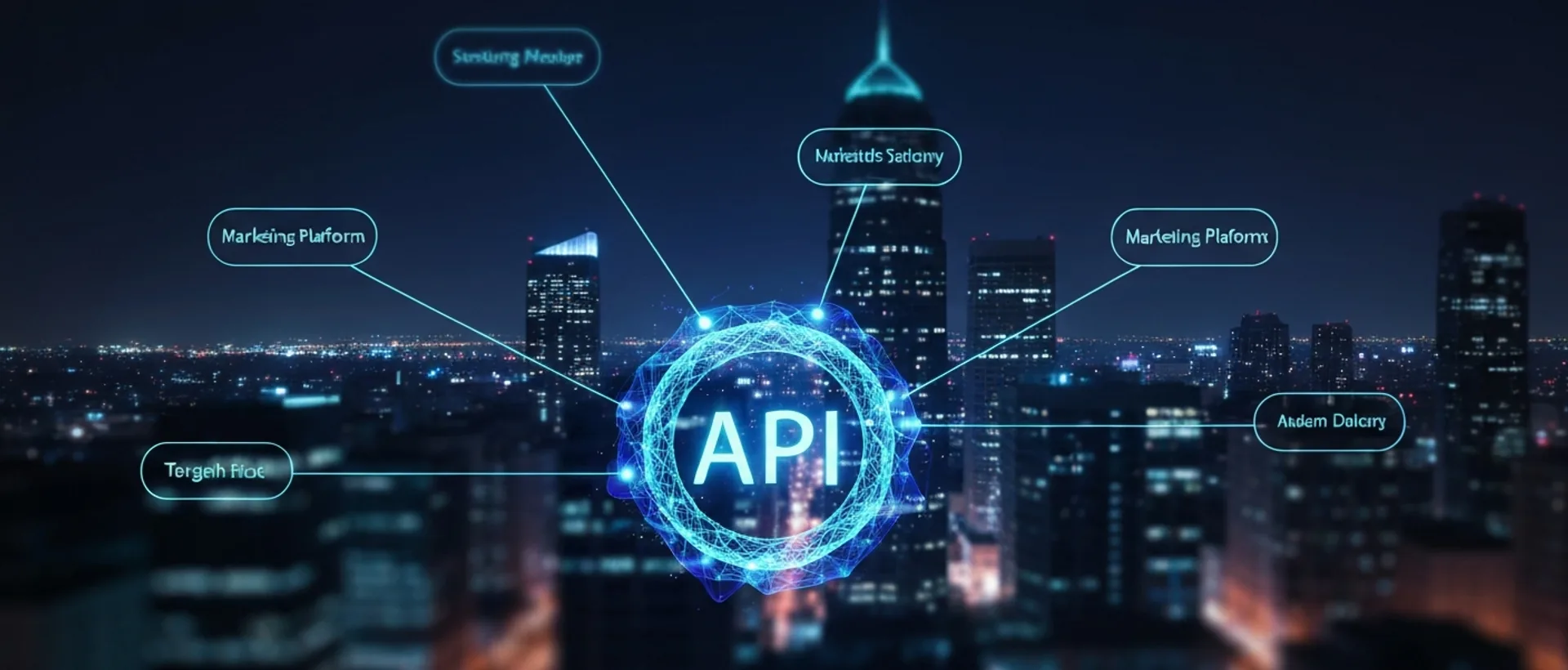
Marketing Automation APIs 2026: What They Are and Why They’re Crucial?
Hey everyone! If you’re in digital marketing, you know things never stop, right? And in 2026, marketing automation APIs are the name of the game. But what the heck are these APIs? Think of them as super smart digital bridges that let your software and platforms “talk” to each other programmatically. They exchange data without you needing to copy and paste, like a tireless and error-free intern.
Today, they’re essential for building marketing that truly works. No more having your data scattered in a thousand places! With APIs, you bring everything together – CRM, email marketing, social media, analytics tools, and even your e-commerce. This improves your marketing automation workflows and, ultimately, your customer’s experience. There’s no excuse not to use them. For me, anyone not connecting marketing automation systems via API in 2026 is losing money and time. It’s like trying to play professional soccer wearing basketball shoes; it just won’t work properly.
The benefits of marketing API integration are clear: you personalize communication like never before, reduce a ton of manual errors we constantly make, and can scale your operations without a headache. Remember that talk about optimizing billions of lines of JSON that development folks have? Well, APIs do something similar for your marketing, but with customer data. I myself, working remotely for a foreign company and making good money, see firsthand how this connectivity makes a difference day-to-day. It’s what separates those who grow from those who just tread water.
Best Marketing Automation APIs for 2026
Okay, we’ve established that an API is like the conductor of your marketing orchestra. But which are the best marketing automation APIs to keep an eye on in 2026? You can’t just go integrating everything that comes your way, right? You need a strategy.
- HubSpot API: This is like the Swiss Army knife. For HubSpot users, it’s ideal for integrating CRM, marketing, sales, and service. It’s a powerful suite for complete automation, and I confess that, at first, I underestimated its power. I bitterly regret it.
- Salesforce Marketing Cloud API: For those playing in the big leagues, or aspiring to. If your company is looking for large-scale automation and advanced personalization, with a heavy focus on the customer journey, this is the one. It’s a monster, but a good monster.
- Mailchimp API: Want to supercharge your email campaigns? The Mailchimp API is excellent for integrating email marketing and email automation with other e-commerce platforms or CRMs. Simple and direct, no frills.
- Zapier/Make (Integromat) APIs: Here’s where it gets fun for non-programmers. These are “no-code” tools that act as API orchestrators. They enable no-code marketing automation APIs. It’s like a “do-it-yourself” that actually works, and it saves a lot of people’s lives, including mine when I need something quick.
- Google Analytics API: This is the foundation. Crucial for grabbing user behavior data and feeding it into your automation tools. This way, you can optimize marketing automation workflows based on real data. Without it, you’re shooting in the dark, and nobody wants that.
Honestly, choosing the best API isn’t just about picking the most famous one. It’s about seeing which one fits your “48-square-meter apartment,” meaning your budget and your needs. There’s no point in having a Rolls-Royce if you only need to go to the corner bakery.
How to Integrate Marketing Automation APIs: A Practical Guide
Alright, you know what they are and which ones to use. Now, how do we get our hands dirty and make this magic happen? Integrating APIs isn’t rocket science, but it requires a method. If you’ve ever tried building a study app and almost died from the bugs, you know that the order of operations changes everything.
- Define Your Objectives: First, stop and think. Which systems need to communicate? What data needs to be exchanged? Do you want to optimize lead marketing automation workflows? Or abandoned cart recovery? Without a clear objective, you’ll be shooting in all directions.
- Choose the Right APIs: With your objectives defined, select the best marketing automation APIs that align with what you already use. Don’t try to reinvent the wheel. If you already have a CRM, check its APIs.
- Authentication and Authorization: This part is important for security. You’ll need to configure API keys and access tokens. Think of this as the key and password to unlock communication between systems. Without it, no one gets in, and that’s right!
- Data Mapping: This is where we ensure that “name” in system A is “name” in system B, and not “customer_identifier_01”. You define how data will be transferred and, if necessary, transformed so that everything remains consistent. It’s the tedious part, but without it, it turns into a mess.
- Test and Monitor: Never, ever, under any circumstances, launch an integration without testing. Conduct rigorous tests. After launching, monitor. APIs can change, and what worked yesterday might break today. It’s like a car, it needs maintenance.
I’ve seen many people skip steps and then cry about it later. Don’t be that person. Following these steps will save you a lot of headaches and ensure your integration works like a Swiss watch, or better yet, like a soccer team that truly understands tactics, and not like those directors who, well, we already know how they are, right?
Practical Examples of Marketing Automation with API
Seeing the theory is one thing, but understanding how marketing automation with API works day-to-day is another. Here are some practical examples that show the power of these integrations, without all that “customer journey” talk that nobody truly understands:
- Personalized Welcome: Just imagine: a new lead enters your CRM. Immediately, the API sends the information to your email marketing system, which triggers a fully personalized welcome sequence. Without you lifting a finger. Cool, right?
- Abandoned Cart Recovery: The customer was there, almost buying, but abandoned their cart. The API connects your e-commerce with the email platform and, poof, an automatic reminder based on their browsing history. This works wonders!
- Dynamic Segmentation: Using website behavior data (which comes directly from the Google Analytics API, for example), you can segment your audience in real-time. This way, offers in ads or emails are personalized instantly. It’s the 1:1 marketing everyone talks about.
- Customer Status Update: Did your customer make a purchase? The API synchronizes CRM data with the automation platform, adjusting the customer journey. No more sending “buy now” emails to someone who has already bought. It’s basic, but many people get it wrong.
- Marketing Automation for Small Businesses 2026: And who said only big companies use APIs? Small businesses can use APIs to connect more affordable tools. Like a simple CRM with free email marketing, to scale operations without spending a fortune. It’s like optimizing the space of your 48-square-meter apartment: every corner counts.
Seriously, if you’re not using this, you’re leaving money on the table. Believe me, these integrations are more important than most people think. It’s what makes marketing stop being a “shot in the dark” and become something predictable and results-driven.
Challenges and Solutions in Marketing API Integration
Integrating APIs is cool, but it’s not a bed of roses, okay? There are always some hitches. And if you’ve ever tried optimizing billions of lines of JSON, you know that complexity can turn into a nightmare. But hey, for every challenge, there’s a solution.
- Challenge: Technical Complexity: Ah, the old story of needing a programmer for everything. Integration can indeed require more technical knowledge.
- Solution: Use iPaaS (Integration Platform as a Service) platforms like Zapier or Make. They are the salvation for no-code marketing automation APIs. You drag and drop, and the magic happens. I’m a confessed fan.
- Challenge: Data Security and Privacy: With so much data flying around, how do you ensure nothing leaks?
- Solution: Implement strong authentication (like OAuth 2.0), use encryption, and, of course, strictly follow LGPD here in Brazil and GDPR abroad. Customer data is sacred, and the fine is hefty.
- Challenge: Maintenance and Scalability: APIs can change. What works today might not work tomorrow. And the integration needs to withstand the strain when data volume grows.
- Solution: Monitor your APIs for updates. Design modular solutions, so if one part breaks, it doesn’t bring everything down. And use API management tools. It’s like managing a game server: you have to keep an eye on reports of improper behavior to keep everything running smoothly.
- Challenge: Incompatible Data Mapping: Each system has its own way of naming things. “Nome” here, “first_name” there. It turns into a mess!
- Solution: Use data transformations. ETL (Extract, Transform, Load) tools help standardize information before it becomes a knot.
Facing these challenges head-on is what defines the success of your strategy and the future of marketing automation 2026. There’s no running away; you have to solve them.
The Future of Marketing Automation with APIs in 2026
If you think you’ve seen it all, hold on tight: the future of marketing automation with APIs in 2026 is going to be even crazier. We’re talking about hyper-personalization, 1:1 experiences at scale and in real-time, all powered by artificial intelligence and machine learning. It’s like the DeFi market, with Ethereum pulling billions and Avalanche with dizzying APYs – all constantly moving and generating value.
We’ll see the rise of “API-first” platforms, where integration capability isn’t an extra, but the core of the product. This will greatly facilitate the creation of flexible digital ecosystems that adapt to any change. I, personally, think that anyone who doesn’t prepare for this will be left behind. For me, moderation in embracing new technologies is just a way to defend a status quo that will no longer exist.
No-code marketing automation APIs will become the standard. This means more people, without a technical background, will be able to set up complex integrations. It’s the democratization of automation’s power, and that’s awesome! And it doesn’t stop there: integration with Web3 and decentralized technologies promises to open new frontiers for data collection and use, always with a greater focus on user privacy and consent. The focus in 2026 will be on intelligent data orchestration. APIs will not only connect but also enrich and activate data to proactively optimize marketing automation workflows.
In summary, marketing automation APIs 2026 are not just a trend, they are the reality. Those who know how to use these tools to connect marketing automation systems will be light-years ahead. The game is changing, and you need to be in it.