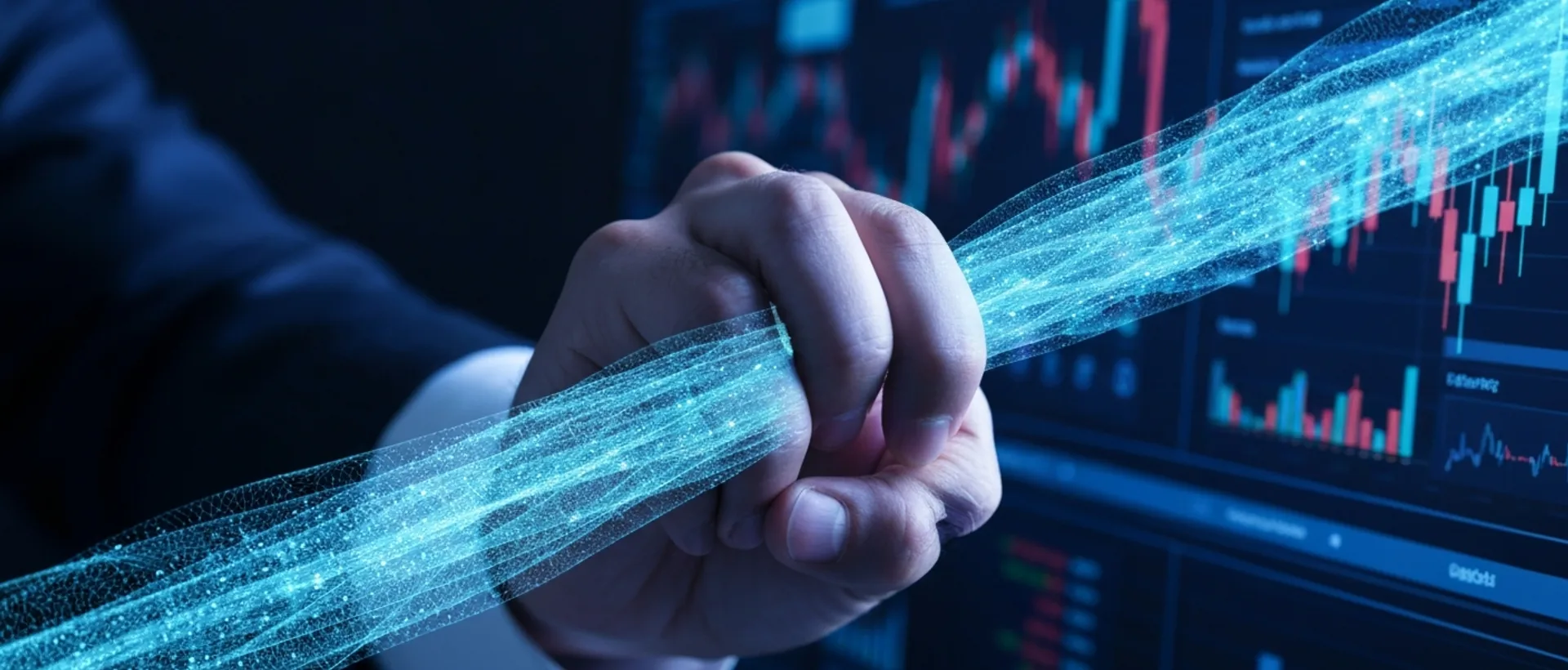
AI in the Financial Market 2026: More Hype Than Tangible Reality?
In 2026, artificial intelligence in the financial market, despite promising the moon and stars, still struggles with financial trading automation, being more hot air than something truly solid. That story about AI investment robots that operate on their own and never make mistakes? Pure nonsense. Forget the need for real people constantly monitoring and adjusting things.
The impact of AI in finance in 2026 is undeniable, of course, especially for analyzing a ton of data and optimizing investment portfolios. But the idea that machines will replace experienced traders? That’s something out of a sci-fi movie, an old wives’ tale they tell you to sell courses. To me, it’s a pipe dream.
Many AI trading platforms sell an illusion of ease, as if you just press a button and get rich. But the future of AI trading still relies on AI investment algorithms that are true black boxes. We barely understand what’s going on inside. The real question isn’t “how artificial intelligence changes the financial market,” but rather “to what extent is this change real, or just another tool in our arsenal?”
The Hidden Challenges of Financial Automation with AI
We hear a lot about the advantages of financial automation with AI, like the speed and volume it can operate at. But the challenges of AI in the financial sector are greatly underestimated, especially when the market decides to turn upside down, as unpredictable as a pick-up soccer game. Machine learning in trading, which seems so promising, keeps falling into the trap of overfitting and data biases.
This leads to decisions that can be disastrous when the market does something no one expected. It’s like betting on a horse that only wins on dry tracks, and suddenly it starts raining cats and dogs. AI regulation in the capital market, in turn, is still crawling. This creates a huge legal loophole, exposing investors to risks no one has properly mapped, and to these algorithms that are true black boxes.
What is the role of AI in quantitative trading? It’s a powerful tool, yes. No one denies that. But it relies too much on old data, and that becomes a huge weakness in times of disruption. Thinking AI removes emotion from trading is a myth. It just takes the biases and quirks of whoever programmed it and throws them into the algorithms, but on a much larger scale. To me, that’s six of one, half a dozen of the other, and even worse.
The False Promise of Total Independence for Investment Robots
AI investment robots are sold as financial freedom personified, right? But this independence is one of those illusions that ignores the constant intervention we need to prevent our money from going up in smoke. Financial trading automation demands relentless human vigilance, because no algorithm can predict a “black swan” or a sudden market shift.
The future of AI trading isn’t about us disappearing from in front of the computer. Quite the opposite. It’s about us working alongside these intelligent systems, where the intuition and experience of those who have been there for years still count for a lot.
Achar que um algoritmo substituirá um trader com 30 anos de mercado é subestimar a complexidade humana e a imprevisibilidade do capital. É uma visão ingênua da tecnologia.
It’s laughable, right? Unbelievable.
The True Power of AI in the Financial Market 2026: Amplification, Not Replacement
The true value of artificial intelligence in the financial market lies in amplifying what we already know how to do, not in replacing us. But the market insists on not understanding this. AI investment algorithms are great tools for analyzing a truckload of data and finding patterns. But the final decision, the “go or no-go,” and risk management? Ah, my friend, that still depends on human shrewdness and acumen.
A IA é show pra processar notícias e relatórios em tempo recorde. Mas a interpretação do contexto, o “cheiro” de que algo tá errado ou certo, o famoso ‘gut feeling’? Isso é só pro trader de alto nível. A máquina não tem faro.
— @analistafinanceiro_sincero no Threads
The “intelligence” of these machines is entirely based on what has already happened. Creativity, the ability to adapt in totally new situations, that’s still only in our heads.
Minha IA previu o crash em 2008! Ah, espera, ela foi treinada com dados até 2007. Oops. #IAfail #MercadoFinanceiro
— @quant_sarcástico no X
So, AI in the Financial Market 2026 isn’t the end of the trader, but rather an opportunity for us to be even better. It’s a great assistant, but the boss, the conductor of the orchestra, is still us. Anyone who says otherwise is either deceiving you or hasn’t understood a thing.