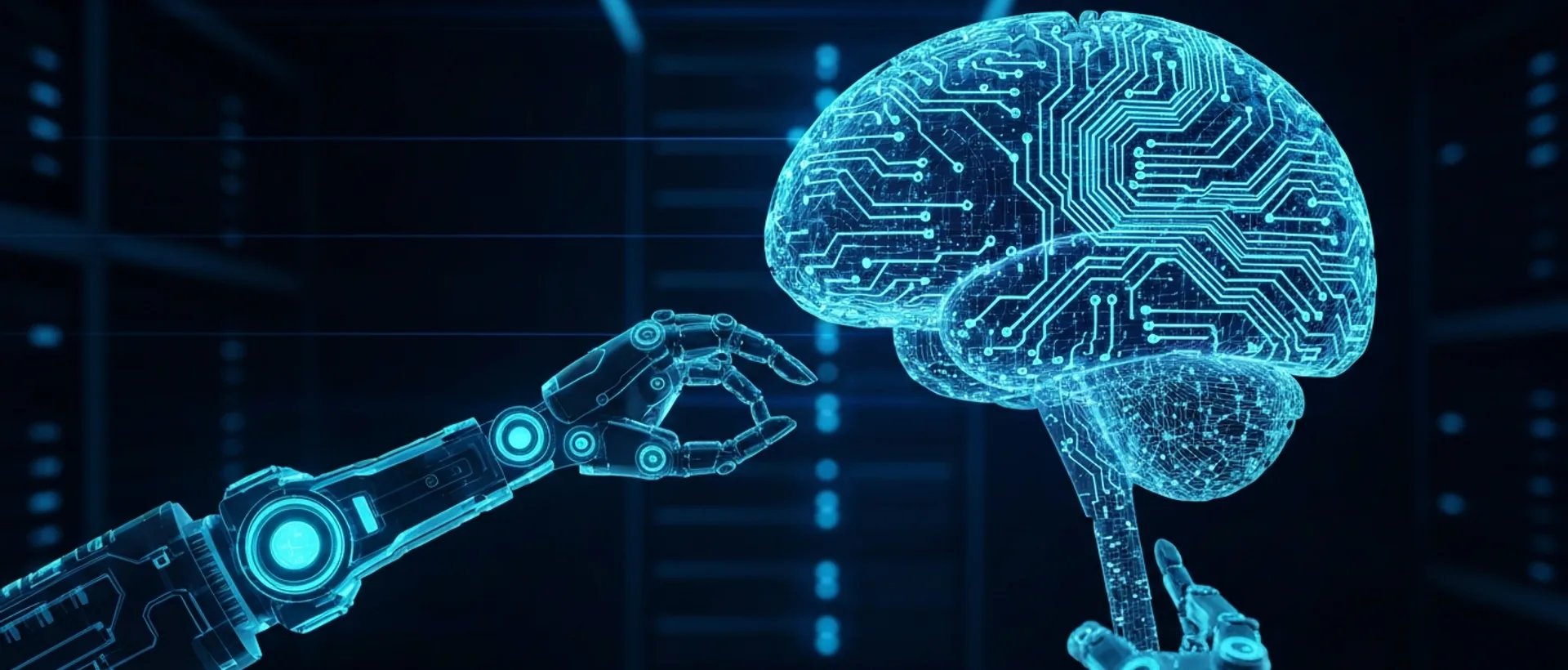
RPA vs AI 2026: Understanding the Essential Distinctions
In 2026, the main difference between RPA (Robotic Process Automation) and AI (Artificial Intelligence) lies in the ability to “think” and learn. While RPA executes repetitive tasks based on predefined rules, AI can analyze data, make decisions, and learn from experience, adapting to constantly changing scenarios. To be very direct, RPA does what it’s told, AI figures out what needs to be done.
RPA is a technology that automates structured and repetitive processes. Think of a robot that mimics what you do on the computer: clicking, typing, copying, and pasting data. It’s great for tasks like data entry, generating reports, or processing forms, all following a fixed script. It’s like a super fast employee who never makes mistakes, but has no autonomy to deviate from the script.
AI, on the other hand, uses advanced algorithms to simulate human intelligence. It enables pattern recognition, natural language processing, and machine learning for much more complex tasks. If you’ve ever used an app that recommends a movie or a song, or instantly translates text, you’re interacting with AI. It deals with data that doesn’t follow a pattern, which is a huge challenge for any traditional system.
Robotic process automation is ideal for making operations more efficient in processes that are already well-defined. AI, however, is important for dealing with data that arrives in any format and for improving strategic decision-making. The big thing, and here’s my honest opinion, is that many people still confuse the two or think they’re the same thing. They’re not, but the magic happens when they come together.
The combination of RPA and artificial intelligence together represents the future of automation. I see it as a dream team, you know? We create stronger, more adaptable systems that overcome the limitations of each technology alone. It’s like having a soccer player who’s good at scoring goals and another who’s a strategic genius. Together, they dominate the field.
Comparative Analysis: RPA and AI in Real-World Use Cases
RPA excels in scenarios such as invoice automation. Just think: a bot can extract data from invoices, which usually have a standard format, and input that information directly into an Enterprise Resource Planning (ERP) system. All without someone constantly typing. It’s the kind of boring, repetitive task nobody wants to do, and RPA handles it easily.
AI, in turn, is applied in predictive analytics to anticipate market trends or in recommendation systems that personalize the customer experience. For this, it needs to process a huge volume of complex data, much of it unstructured. An RPA could never do this because it doesn’t have the capacity to “read” between the lines.
A classic example of RPA is automating new employee onboarding in HR. The bot fills out forms, configures system access, and sends welcome emails, all based on clear rules. It’s a process with a well-defined beginning, middle, and end. If the process changes even a little, the bot needs to be reconfigured, and that’s where the danger lies.
The benefits of AI in automation include the ability to interpret emails that arrive without a pattern, classify customer support tickets, and even generate personalized responses. This is something RPA alone cannot do at all, because emails and conversations are full of nuances. Honestly, trying to get an RPA to read a complex email is like asking a fish to ride a bicycle. It’s just not going to happen.
The difference between RPA and AI is very clear when we look at task complexity: RPA is about “doing,” AI is about “thinking” and “deciding.” It’s like the difference between a taxi driver who follows GPS and a traffic engineer who plans entire routes for the city. Both are important, but the skills are different.
Cat typing on a keyboard
Powerful Synergy: RPA with AI for Advanced Automation
The fusion of RPA and AI, which we call Intelligent Automation, is like the result of a perfect “marriage.” It allows robots to perform repetitive tasks (RPA) while AI adds the intelligence to handle exceptions, unstructured data, and, of course, make decisions. This is what we truly want: a system that not only works hard, but also thinks.
A practical example of RPA with AI is in automating a loan approval process. RPA kicks in first, collecting all data from customer forms, accessing banking systems, etc. Then, AI takes over, analyzing the applicant’s risk profile, validating documents, and detecting possible fraud. It can identify patterns that a common RPA would never see. It’s a “two-in-one” that solves a big problem.
AI enhances RPA by giving it superpowers. It offers features like Natural Language Processing (NLP) to interact with customers more humanly, or Computer Vision to interpret images and documents, such as recognizing a face in a photo or reading a scanned document. This overcomes the limitations of RPA without AI, which would be lost if the information wasn’t in the exact right place. I confess, at first I thought it was an exaggeration, but today I see it’s the secret sauce.
This integration creates a virtuous cycle, a “win-win” that makes perfect sense. RPA feeds AI with the data it collects, and AI, in turn, uses this data to optimize the rules and performance of RPA bots. It’s like a coach observing the team’s game (RPA) and giving strategic tips (AI) for them to play better next time.
Combined RPA and AI use cases include automating customer service with intelligent chatbots. These chatbots use NLP to understand what the customer is saying and, if an action in the system is needed (like checking a balance or issuing a duplicate), they trigger an RPA bot to do the heavy lifting. It’s like having a super polite attendant who knows everything and has a lightning-fast helper to get things done.
RPA vs AI 2026: Detailed Capability Comparison
To make everything clearer, I’ve prepared a table showing the capabilities, applications, and challenges of each technology in 2026. It highlights the value of robotic process automation and artificial intelligence, giving you a clear vision to decide what’s best for your company.
| Feature | RPA (Robotic Process Automation) | AI (Artificial Intelligence) |
|---|---|---|
| Core Functionality | Rule-based, executes repetitive tasks | Learns, reasons, makes decisions, recognizes patterns |
| Data Type | Structured and repetitive | Structured and unstructured |
| Learning Capability | None. Requires manual reconfiguration for changes | Learns from data and experience, adapts |
| Task Complexity | Low to medium (execution) | Medium to high (cognition, analysis) |
| Implementation Cost | Generally lower, faster ROI | Generally higher, requires more data and expertise |
| Use Examples | Data entry, invoice processing, HR | Predictive analytics, chatbots, computer vision |
This section details the difference between automation and AI in terms of functionality and scope. It’s important to note that RPA is a form of automation, but AI is a technology that simulates intelligence.
The analysis of pros and cons reveals that RPA offers faster implementation and a return on investment (ROI) in low-risk tasks that are boring but necessary. AI, on the other hand, provides greater adaptability and capacity for innovation, even being able to create new solutions.
✓ Prós
- RPA: Fast implementation
- Clear ROI in repetitive tasks
- Lower initial cost
- Reduces human errors. IA: Handles complex data
- Learns and adapts
- Advanced decision-making
- Generates strategic insights.
✗ Contras
- RPA: Doesn’t handle exceptions
- Doesn’t learn
- Depends on fixed rules
- Limited to structured data. IA: High implementation cost and complexity
- Requires extensive training data
- Demands technical expertise
- Ethical and privacy concerns.
You know, it’s common to hear the question “Is RPA artificial intelligence?”. And the answer is a resounding no! RPA is a form of automation. If I could slap the forehead of anyone who still confuses this, I would. AI is a much broader discipline that allows machines to “think” and learn. The future of automation 2026 points to an inevitable convergence of these technologies, where artificial intelligence becomes an important component to supercharge RPA’s capabilities.
Challenges and Perspectives for 2026: The Future of Intelligent Automation
The limitations of RPA without AI are quite obvious: it can’t handle messy data, unforeseen exceptions, and worst of all, it learns nothing. This means that if a process changes even a little, someone has to manually adjust the robot. It’s like having a super fast car that can only drive in a straight line.
The main barrier to fully adopting AI in automation is still the complexity of implementation. Think about it: you need an absurd volume of data to “teach” the AI and highly qualified people to manage and optimize these algorithms. It’s not plug and play, nope. Many companies still stumble here, thinking it’s just a matter of installing software and that’s it.
In 2026, we expect the integration between RPA and AI platforms to improve significantly, with more accessible “off-the-shelf” solutions for companies of all sizes. The idea is that you shouldn’t need to be a data scientist to use AI. This will democratize intelligent automation, which is great news for small and medium-sized businesses that are currently left out.
Ethics in AI and data security continue to be concerns that keep many people up at night. You can’t just go around automating everything without thinking about the consequences. Clear rules and strong governance are needed to ensure that intelligent automation is used responsibly. Nobody wants a real-life Skynet, right?
The growing demand for professionals skilled in both RPA and AI highlights the importance of training programs. Companies need to build multidisciplinary teams to succeed with automation. It’s no use having the best RPA bot if there’s no one to teach the AI to make the right decisions. It’s a challenge, but also a huge opportunity for anyone looking for a career in the future.
Intelligent automation, combining RPA and AI, is rapidly transforming business processes. By 2026, expect significant advancements in hyperautomation capabilities, driving efficiency and innovation across industries. #RPA #AI #Automation
— @Gartner_IT no X
FAQ
What is the main difference between RPA and AI in 2026?
In 2026, the main difference is that RPA automates repetitive, rule-based tasks, while AI simulates human intelligence to learn, reason, and make decisions. RPA focuses on execution, and AI on cognition and adaptation.
Is RPA considered artificial intelligence?
No, RPA is not artificial intelligence. RPA is an automation technology that mimics human actions to execute structured processes. AI is a broader discipline that allows machines to “think” and learn.
How does AI enhance RPA?
AI enhances RPA by adding cognitive capabilities, such as natural language processing, computer vision, and machine learning. This allows RPA bots to handle unstructured data, make more complex decisions, and adapt to new situations, overcoming the limitations of RPA without AI.
What are the benefits of using RPA and artificial intelligence together?
Using RPA and AI together creates more powerful and flexible intelligent automation. Benefits include increased efficiency, reduced errors, the ability to process complex data, improved decision-making, and scalability to automate end-to-end processes, from simple to more cognitive tasks.
What are the limitations of RPA without AI?
The limitations of RPA without AI include the inability to handle exceptions or unstructured data, a lack of learning capability, and dependence on fixed rules. This means that traditional RPA can fail when processes deviate from the predefined pattern, requiring manual intervention.