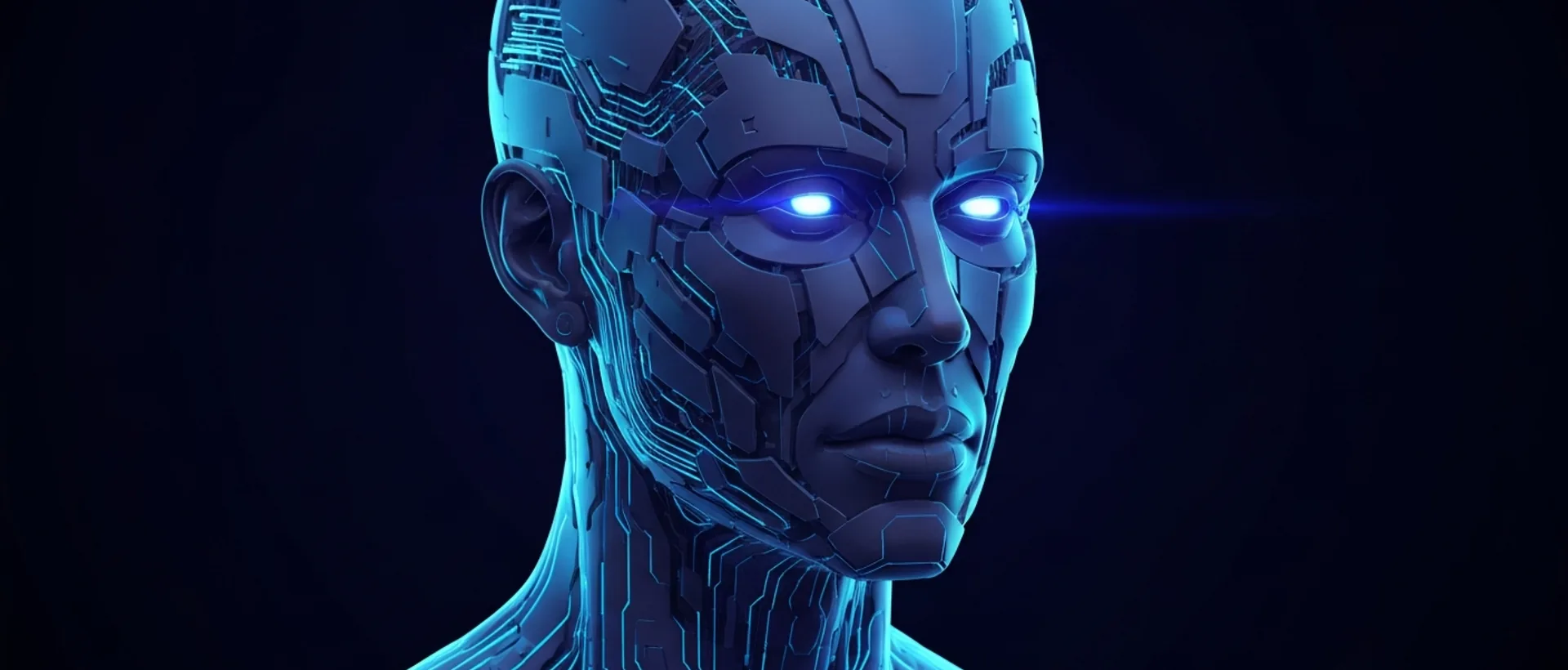
Artificial Intelligence in 2026: The Hype Doesn’t Deliver Everything
You can stop dreaming about Skynet or humanoid robots serving coffee at your desk. Artificial intelligence in 2026, honestly, isn’t all that sci-fi stuff people love to sell. In reality, what we see is a set of super advanced tools, yes, but focused on optimizing and automating tasks, not on a consciousness that will take over the world. Today’s AI is more like a brilliant intern who does everything you tell them to, but doesn’t think for themselves ejfgv.com.
What is artificial intelligence, really? They are complex algorithms. They learn patterns, make data-based decisions, and perform specific tasks. But “consciousness”? That’s movie talk, not the technological reality of 2026. How AI works is still a mystery to many, and it’s precisely this lack of clarity that creates room for so much exaggeration. But, check it out: it operates with mathematical and statistical models. There’s no magic, no spirit; it’s just a lot of advanced math and computing.
Despite all the advancements, the future of artificial intelligence in 2026 is more about refining niches and improving what already exists than about a radical and universal societal transformation. Microsoft, for example, back on February 19, 2026, already pointed out seven trends that would define the year, and among them was human-AI collaboration and security. Nobody talked about superintelligence taking over the show, you know? microsoft.com.
AI won’t steal your job tomorrow; at most, it will automate the most boring parts of it. The panic is disproportionate to the technological reality.
And that’s the reality. We need to stop fantasizing and start understanding what AI really does. It’s a heck of a tool, but it’s still a tool. And like any tool, it needs someone to use it, to direct it, to give it meaning. The panic that AI will replace everything is like thinking the calculator will retire the mathematician. It won’t; it just speeds up the work.
AI Impact: Less Drama, More Process Optimization
AI’s impact on society in 2026 is visible, but gradual and incremental. We see smarter virtual assistants, medical diagnoses that help a lot, and logistics optimization that makes the economic wheel turn faster ejfgv.com. These are the improvements that happen behind the scenes, without much fanfare. FIA, on May 15, 2026, highlighted that AI has entered a more mature phase, with companies discussing less “isolated experiments” and more “integration with processes, governance, and infrastructure” fia.com.br. In other words, AI is becoming part of the system, not the entire system.
Examples of AI in everyday life? You use it all the time and don’t even notice. Spam filters in email, movie and series recommendation algorithms, your phone’s spell checker. All of this is AI operating smoothly, without making a fuss. AI doesn’t need a spotlight to be useful; it just needs to work well. And, honestly, it’s been working a lot to make our lives a bit easier.
The benefits and challenges of AI are clear. On one hand, we gain efficiency and productivity. On the other hand, we need to deal with AI security and ethics, a debate that’s far from resolved. The speed at which technology advances is much greater than our ability to discuss and create rules, right? It’s like trying to regulate the internet with laws from the telegraph era.
In the job market, AI and the job market are constantly being reshaped. But this story that AI will end all jobs is a massive exaggeration. What will happen is an adaptation. Repetitive tasks, yes, will be automated. But new ones will emerge, requiring different, more human skills, such as creativity, critical thinking, and emotional intelligence. In other words, those who adapt, do well. Those who don’t, then yes, will have problems.
Do you want to know how this adaptation directly impacts your business, whether you’re a content creator or an entrepreneur? Check out our article on AI and Productivity 2026: The Inconvenient Truth. There we dive deep into this discussion and show you what really matters so you don’t get left behind.
Types of AI and Brazil’s Role: Demystifying “Superintelligence”
When we talk about types of artificial intelligence that are in vogue, we’re mainly talking about AI focused on specific tasks. It’s what’s called weak AI. Image recognition, natural language processing, recommendation systems… These are the areas where AI shines in 2026. It’s good at one thing, and it does that thing very well. “Superintelligence,” the kind that thinks and feels like a human (or better), is still pure science fiction. AI in 2026 has no consciousness, nor general human intelligence, despite what a lot of movies and sensationalist articles want you to believe. Seriously, if it can’t even decide what to eat for lunch, imagine taking over the world?
What is AI’s role in healthcare? It’s a support and data analysis role. It helps doctors identify patterns in exams, accelerate diagnoses, and research new treatments. The AI in healthcare market, for example, is expected to reach US$56.01 billion in 2026, with an absurd growth of 43.96% by 2034 fortunebusinessinsights.com. But it doesn’t replace human expertise, the doctor’s touch, the capacity for empathy, and the ability to make complex decisions that require more than just data. It’s a super powerful right-hand, but the brain is still ours.
Artificial intelligence in Brazil follows global trends, with a special focus on business automation and agribusiness. We’ve seen some really cool projects here, using AI to optimize plantations, predict harvests, and improve logistics. But we also face major challenges, such as a lack of investment in research and development, and infrastructure that doesn’t always keep pace with technology. There’s no point in having the best AI in the world if the internet doesn’t reach the farm, right?
AI 2026 isn’t Skynet. It’s more like a very, very advanced calculator. Calm down, folks. #AI #AIReality
— @TechCeticus no X
And there’s another important thing: we need to stay alert so we don’t fall into the hype trap. Many people sell AI as the solution to all problems, but the truth is it’s only part of the solution. To better understand the difference between propaganda and reality in Brazilian digital marketing, where AI is all the rage, jump over to our text on AI Digital Marketing Brazil 2026: The Hype Fallacy. It’s to unmask the charlatans on duty.
Regulation and Ethics: AI’s Achilles’ Heel in 2026
Now, if there’s one point where AI in 2026 really gets on my nerves, it’s regulation and ethics. It’s this technology’s Achilles’ heel, no doubt. The regulatory challenges are enormous because AI evolves at a speed no law can keep up with. It’s like trying to chase a Formula 1 car with a horse-drawn cart. Experts are already debating this, and the consensus is that the challenge is not to halt innovation, but to prevent laws from becoming obsolete even before they are implemented dn.pt.
The European Union, for example, has already taken the lead with the Artificial Intelligence Regulation (AI Act), in force since August 1, 2024. It is the first horizontal and comprehensive legal framework on AI in the world, and it tries to bring some order to this mess, aiming at the legal responsibility of the technology stoque.com.br. But even so, the discussion continues. We need to ensure transparency, accountability, and security, especially in high-risk systems. You can’t let an AI make decisions that affect people’s lives without having a very clear “who is responsible?”
And there’s more: the concern about a possible speculative “bubble” in the AI market is real. Global spending projected to exceed 2 trillion dollars in 2026 swissinfo.ch raises the question: is all this money being invested intelligently, or is it just the euphoria of the moment? The decentralization of open-source models also complicates regulators’ lives, because it becomes harder to control what’s being developed and used.
Digital inequality is also a delicate point. There is a risk of creating a gap between those who master the technology and those who don’t, generating an even greater salary disparity pi.leg.br. And, to top it off, the accuracy and authorship of AI-generated content are a huge problem. We’ve already seen cases of reports with serious errors and invented citations. We need a filter, a sharp critical sense so as not to fall for any AI talk.
Enough of AI gurus promising the moon and stars. AI in 2026 is a powerful tool, yes, but with well-defined limits. Realistic expectations, please! #ArtificialIntelligence #HotTake
— @jornalista_sincero no Threads
We need to stop thinking that AI is a magical entity that will solve everything on its own. It is a reflection of the data we feed it and the intentions of those who program it. And if the data or intentions have a bias, AI will reproduce and even amplify that bias. Want to understand how this works and why it’s so dangerous? Our article on Discover: Political Bias AI 2026: The Truth of Algorithms lays bare this reality.
Prepare for Reality: Education, Skepticism, and Money
For those who want to know how to learn AI in 2026, the path is not to look for magical shortcuts or promises of “get rich with AI in 30 days.” The focus should be on solid fundamentals: programming, mathematics, statistics, and, most importantly, ethics. Alura already shows that the AI market is heated, but the demand is for qualified professionals with a strong foundation alura.com.br. It’s not enough to just know how to press buttons; you have to understand what’s behind it.
Security and ethics in AI remain the biggest concerns. It’s a continuous debate that requires regulation, yes, but also a broad and transparent discussion with society. You can’t let technology run wild without any kind of brake or direction. It’s like giving a race car to someone who has never driven: the chance of things going wrong is huge.
The real skill we need to develop is discerning what AI can really do from what is just propaganda and sensationalism. This competence is much more valuable than mastering any specific AI tool. Because tools change, evolve, but the ability to think critically about them, to question, to understand their limits – that’s what keeps you ahead.

The truth is that AI in 2026 is a powerful partner, as Microsoft Source predicted back on December 8, 2025 microsoft.com. It can boost our productivity, our creativity, and our problem-solving ability. But this partnership demands responsibility; it demands that we educate ourselves, that we question, and that we don’t fall for any old wives’ tale. The future of AI is not a predetermined destiny; it’s something we build, day after day, with real intelligence, not just artificial.
Sources
- https://www.citeforma.pt/noticias/sete-tendencias-inteligencia-artificial-que-vao-marcar-2026 — Seven Artificial Intelligence trends that will mark 2026 ↩
- https://news.microsoft.com/source/latam/features/noticias-da-microsoft/o-que-vem-por-ai-na-ia-7-tendencias-para-ficar-de-olho-em-2026/?lang=pt-br — What’s coming in AI: 7 trends to watch in 2026 ↩
- https://ejfgv.com/blog/impactos-da-inteligencia-artificial-em-2026/ — Impacts of Artificial Intelligence in 2026 ↩
- https://portalibre.fgv.br/noticias/inteligencia-artificial-impactos-sobre-o-crescimento-economico — Artificial Intelligence: impacts on economic growth ↩
- https://stoque.com.br/dpa/regulamentacao-da-ia/ — AI Regulation ↩
- https://www.alura.com.br/artigos/mercado-de-ia — AI Market: what it is, how it is, and what to expect? ↩
- https://fia.com.br/blog/tendencias-de-ia-para-empresas-em-2026-2/ — AI Trends for Businesses in 2026 ↩
- https://www.fortunebusinessinsights.com/pt/industry-reports/artificial-intelligence-in-healthcare-market-100534 — Artificial Intelligence in Healthcare Market ↩
- https://dinheirovivo.dn.pt/economia/regulao-da-ia-em-debate-em-cimeira-da-nova-que-junta-esta-quinta-feira-especialistas-internacionais — AI Regulation debated at Nova summit bringing together international specialists this Thursday ↩
- https://www.swissinfo.ch/por/os-desafios-da-intelig%C3%AAncia-artificial-em-2026/90499883 — The challenges of artificial intelligence in 2026 ↩
- https://www.al.pi.leg.br/comunicacao/tv-assembleia/noticias-tv/inteligencia-artificial-em-2026-o-ano-da-virada-global-entre-poder-produtividade-e-desigualdade-digital — Artificial Intelligence in 2026: the year of the global turning point between power, productivity, and digital inequality ↩
Ready to scale this idea?
Narratron turns topics like this into retention-optimized YouTube scripts in under 2 minutes — magnetic hook, structure, complete SEO, timestamped description and thumbnail prompt ready to ship. 50 free credits, no card required.