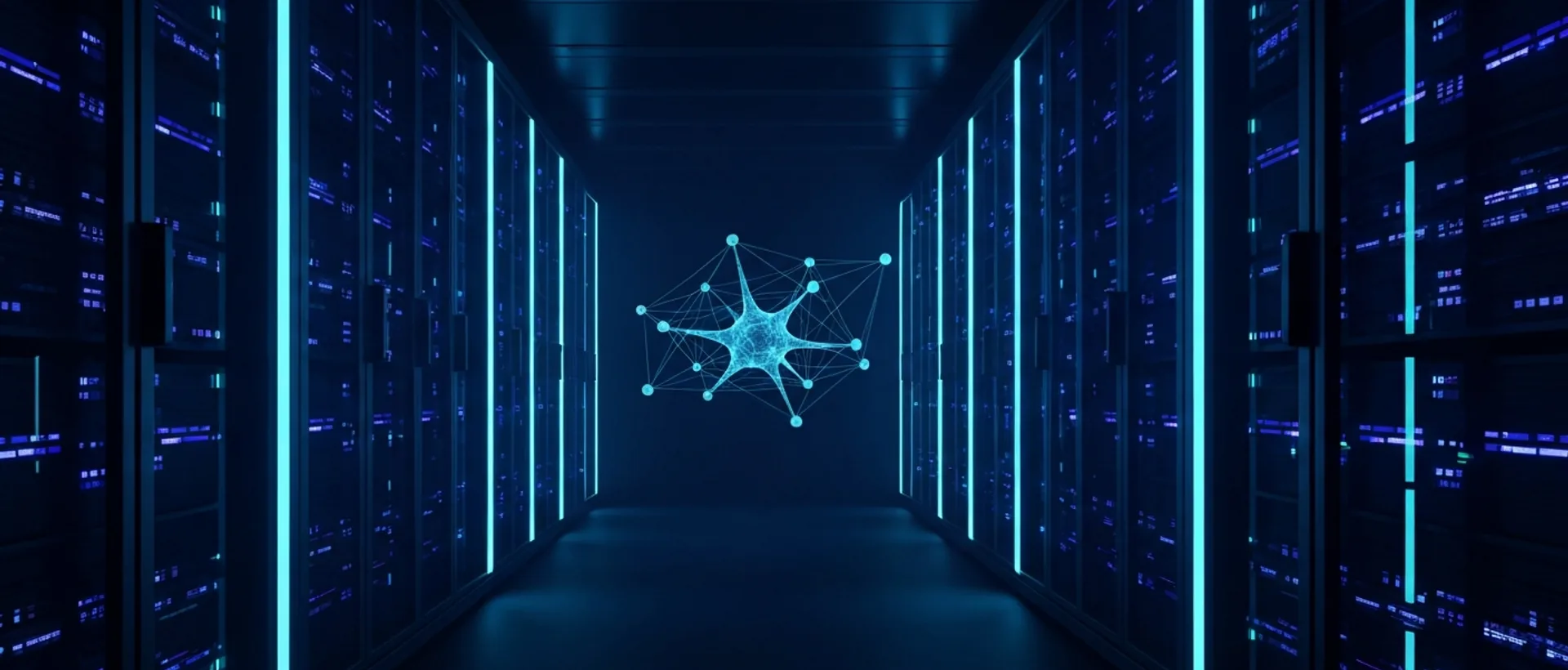
The AI Fairy Tale in Data Centers 2026: More Demand, Fewer Miracles
Folks, let’s be frank here. When it comes to AI and data centers, it seems everyone has become a card-carrying optimist, right? The current narrative suggests that Artificial Intelligence will be our fairy godmother, transforming data centers into oases of energy efficiency by 2026. Nonsense! I honestly think this idea that AI will “optimize” data center energy is more of a marketing slogan than a real game-changer.
Think with me: the impact of AI on data centers here in Brazil, and worldwide, will be dictated by something much more basic: the absurd increase in computational demand. Not by some marginal efficiencies that AI might bring. We’re talking about an insatiable thirst for processing that keeps growing, and AI, ironically, is the thirstiest player in this story.
The promise is beautiful: AI in data centers to reduce energy consumption. But the inconvenient truth is that AI itself consumes a colossal amount of resources to deliver its “benefits.” It’s an energy paradox, my friend. To have “intelligent” AI managing your data center, you need infrastructure that supports this AI, and that’s not free, neither in terms of hardware nor energy. It’s like wanting to save on gas by buying a sports car that uses twice as much fuel, just because it has a super-advanced navigation system that promises the “most efficient” route. Does that make sense? Not much to me.
The operational costs of AI data centers, especially energy costs, will scale in a way we haven’t seen before. And this completely challenges the narrative that AI is the great savior of sustainability. I confess I get a little annoyed when I see this simplistic view. Don’t be fooled: AI alone will not make data centers “greener.” It will make them more complex, more resource-hungry. This will require a brutal re-evaluation of how we think about and build IT infrastructure.
The future of data centers with AI is one of gigantism, of a complexity bordering on science fiction, not of magical simplicity and miraculous efficiency. We’re talking about a technological arms race, where AI is both the weapon and the shield, and the battlefield is energy consumption. And, in the end, we’re the ones who pay the bill, whether in energy costs or environmental impact.
The Illusion of Security and Governance: Risks Amplified by AI
Now, let’s talk about security. Many people out there are celebrating AI as the new cybersecurity superheroine in data centers. Oh, how wonderful! AI will detect threats, predict attacks, protect our data. Great, right? But the truth no one wants to tell is that this same AI introduces a host of new, and quite sophisticated, vulnerabilities. The complexity of AI systems is not an impenetrable fortress; it is, in fact, a brand new attack vector, waiting to be exploited.
Just think: if AI is so smart at defending us, can’t it be equally “smart” when used by those who want to attack us? Of course it can! And then we enter a cat-and-mouse game where both the cat and the mouse are using AI, and every day the game gets more complex and dangerous. It’s like giving someone a sharp knife to defend themselves, but that same knife can turn against them if not handled properly.
Data governance with AI in 2026 will be a minefield, both regulatory and ethical. Who is responsible when an autonomous AI decision goes belly up? If a data center’s AI, for example, decides to shut down a critical system due to an “anomaly” that was actually a false positive, who bears the loss? The AI developer? The data center operator? AI regulation in data centers, as usual, is slower than a turtle on a rainy day. It’s reactive, trying to catch up, instead of being proactive and establishing clear limits from the start.
AI is not a silver bullet for security, much less a magic shield. It is a double-edged sword that, if mishandled, can turn a data center into an even more attractive and vulnerable target.
The naive idea that AI can protect critical infrastructures flawlessly is, at the very least, dangerous. It doesn’t eliminate problems; it just raises the level of the game. Now, both attackers and defenders need to be more sophisticated, smarter. This is not a solution; it’s an escalation. The challenges of AI in IT infrastructure are not limited to hardware or software. Risk management and legal compliance for autonomous systems are the true Achilles’ heel that many people are ignoring. It’s a problem that can’t be solved with just more code or more servers.
We need to stop thinking that AI is the answer to everything. Sometimes, it’s just another question, and a very complex one at that. It’s like when we try to solve a relationship problem by adding another person to the equation. Usually, it doesn’t work, right? It just complicates things.
The Price of “Innovation”: Real Costs and Public Opposition in 2026
Let’s be honest: nobody talks about free stuff when it comes to cutting-edge technology, especially AI. The operational costs of AI data centers will skyrocket, and it’s not just because of the energy we already mentioned. Think about the specialized hardware you’ll need – state-of-the-art GPUs, advanced cooling systems, and a team of AI specialists who, let’s face it, are rarer than unicorns and cost an arm and a leg. It’s not just plug and play; it’s a high-maintenance ecosystem.
The narrative of “AI benefits for data centers” is too good to be true, and often it ignores the massive initial investment and the Total Cost of Ownership (TCO) that few people dare to admit publicly. It’s like buying a luxury car: everyone sees the shine, but few want to know the price of maintenance, insurance, and premium fuel. And with AI, that bill is even steeper.
I, personally, see great hypocrisy in this story. We talk about “optimization,” but what happens is that we are merely shifting the problem, or worse, expanding it. The energy consumption of data centers, driven by AI, is a boogeyman growing in the dark. And this has a cost, not only financial but also social.
Public opposition to data centers is already a reality in many places. Communities complain about excessive water consumption, noise, and, of course, energy consumption. With AI entering the game, this opposition will become even stronger. The perception that AI is draining precious resources from the planet for purposes that often do not bring a clear return to society will be an enormous burden. It’s the “do as I say, not as I do” syndrome on an industrial scale.
For me, the so-called “AI energy optimization in data centers” will actually be a fancy euphemism for “trying to manage the impending disaster of unsustainable demand.” We are heading towards a situation where AI may be efficient in some tasks, but the overall cost, ecological footprint, and social impact will be gigantic. And then, we will ask ourselves: was it worth it?
Demystifying the “Revolution”: The Not-So-Rosy Future of AI Data Centers
Look, if you’re still expecting a “revolution” in data center efficiency because of AI, grab a seat, because here’s the real story. In 2026, AI’s impact won’t be a magic turnaround, but rather an evolution forced by the insatiable demand for processing. AI won’t “solve” the problems we have; in fact, it will amplify them and, on top of that, complicate things even further for the people working with it. It’s like trying to put out a fire with gasoline, but “intelligent” gasoline.
True optimization, the kind that really makes a difference, won’t come from algorithms that move bits back and forth “intelligently.” It will come from disruptive innovations in hardware, from new processing architectures that consume less energy per cycle, and, most importantly, from clean and renewable energy sources. That’s real optimization, not this cosmetic fix that AI promises. We can delve deep into how AI Business Automation 2026: Is Productivity Real? is unfolding, but at the core of the hardware, the conversation is different.
Instead of a golden age, 2026 will be the year when the data center industry begins to come face-to-face with the harsh reality. AI is not the universal solution everyone portrays. It is a powerful tool, yes, but with an energy and environmental cost that we are not yet prepared to absorb. It’s time to realize that initial enthusiasm needs to give way to healthy skepticism and much more realistic planning.
IT infrastructure needs a fundamental overhaul. It’s not enough to just make some cosmetic adjustments and say that AI is “optimizing.” We need to rethink everything, from chip design to data center location, and how we generate and distribute power to them. It’s a discussion that goes far beyond clever algorithms. We need a fundamental transformation, not a technological band-aid. Also, for those interested in how technology is developing, it’s worth checking out Discover: AI Technology News 2026: Advances and Future, but without forgetting the critical side of things.
The Naked Truth: There’s No Free Lunch in the Age of AI
Man, we’re living in a kind of collective delusion where AI is seen as the answer to everything. But let’s agree, in real life, there’s no free lunch, and in the age of AI, that’s even truer. We worry about AI Environment 2026: Technology and Sustainability, and rightly so, but we forget that AI itself, in its thirst for processing, can be one of the biggest environmental challenges we will face.
The truth is that data centers, driven by AI, will become even more voracious. The promise of “optimization” is often an elegant way of saying that we will use more energy to do more complex things, and not necessarily to do things more efficiently per se. It’s like getting a Ferrari to go to the corner bakery, and then complaining about fuel consumption. AI is a powerful tool, but its excessive and unplanned use can create more problems than solutions.
I see many people focusing on the wonders AI can do, but few stopping to think about the hidden cost of this “magic.” The impact of AI on data centers in 2026 will be more about managing the exponential growth of demand than about revolutionary efficiency. We will have to deal with larger, hotter, more complex, and, yes, more expensive data centers.
And then, we will need real people, with brains in their heads, to make difficult decisions. You can’t just leave everything in AI’s hands and expect it to sort itself out. We will need engineers, regulators, thinkers, who understand that technology is a tool, not a god. And that every tool has a price, a cost, an impact.
So, when you hear about “AI optimizing data centers” in 2026, remember: the story is far more complex than it seems. Don’t fall for the marketing spiel. Question, doubt, and demand transparency. Because, in the end, the future of our data centers and our planet depends on it. If you think I’m wrong, maybe it’s time to read AI Technology Impact 2026: Why You Are Wrong! and reconsider.
Sources
Ready to scale this idea?
Narratron turns topics like this into retention-optimized YouTube scripts in under 2 minutes — magnetic hook, structure, complete SEO, timestamped description and thumbnail prompt ready to ship. 50 free credits, no card required.