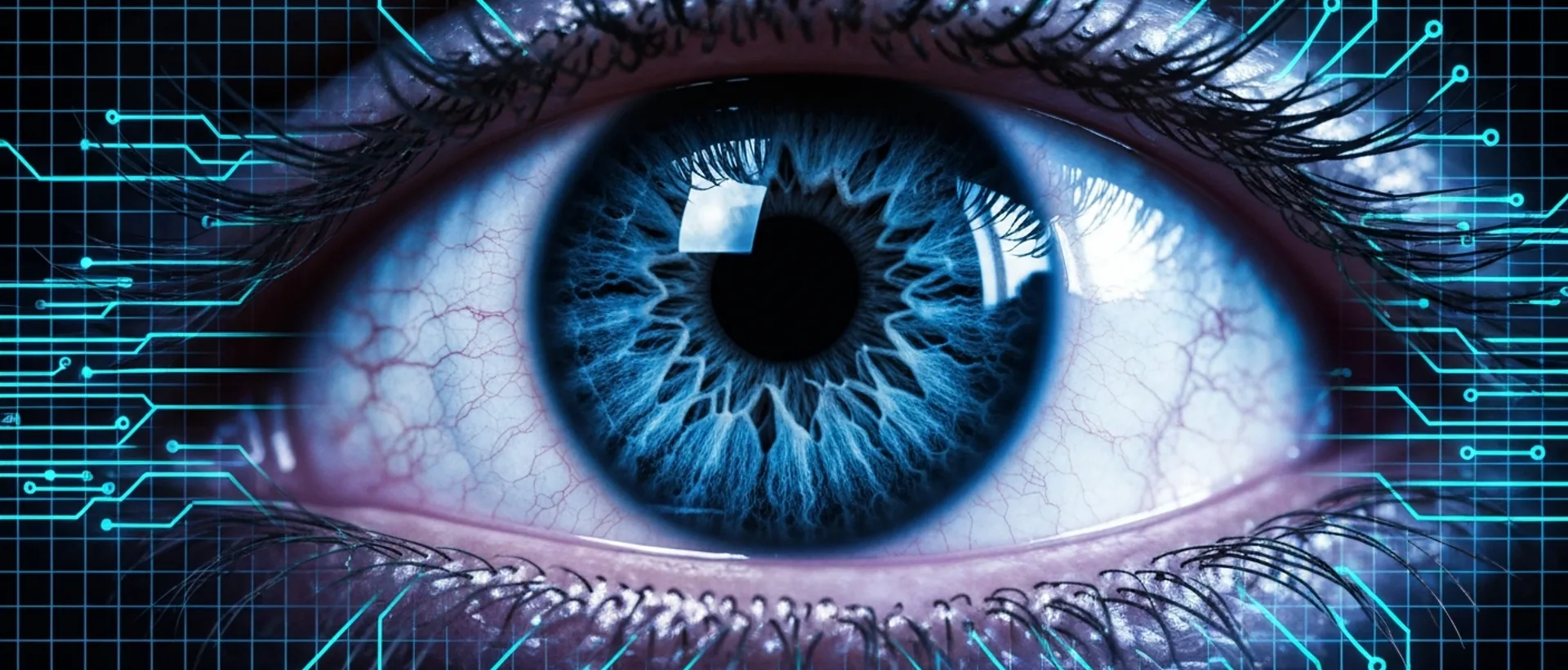
Hey there, DavitAI folks! If you think AI facial recognition in 2026 is just sci-fi movie stuff, I’m sorry to tell you, but you’re way behind the curve. It’s already a reality, and things are heating up in a way we might not even realize. But hey, before you start freaking out thinking AI has become the ultimate Big Brother, let’s take a breath. The truth is, despite all the hype, this technology still has more holes than Swiss cheese. And most importantly: it’s more of a surveillance tool than a security panacea.
What Has Really Changed in AI Facial Recognition by 2026?
Look, a lot of people say that in 2026, AI in facial recognition would be the solution to everything, right? That it would solve security, transportation, even life’s puzzle. But, to be completely honest, this idea of a “technological panacea” is pure nonsense. The reality is that technology has advanced, of course, but it hasn’t become magic. The much-touted precision of AI facial recognition is surprisingly high in controlled environments. Like, if you’re in a well-lit room, standing still, looking at the camera, the chance of you being identified is huge.
But put that same AI on the street, with varying light, people moving, hats, sunglasses, and the precision goes down the drain. It’s like that player who’s a star in practice but chokes during the game. Today’s facial recognition algorithms are indeed more robust, and they heavily use deep learning and metadata avantia.com.br. But the reliance on gigantic databases raises a serious question about our privacy and, especially, consent. No one asked you if you wanted your face in that database, right?
Despite all the talk of “cutting-edge technology in 2026,” AI still struggles to differentiate identical twins or identify someone with a very simple disguise. A beanie, a pair of glasses, and boom, the system gets a bit lost. This exposes a vulnerability that is concerning, to say the least. The big change, in reality, isn’t the perfection of the technology, but its omnipresence. It’s everywhere, from airports to security systems in smart cities in Brazil avantia.com.br, where as early as 2020, AI was used to identify people and vehicles in seconds avantia.com.br.
The “digitalization” of Brazilian cities has been constant, and by 2020, the use of AI to identify people and cars in a matter of seconds was already notable avantia.com.br. In other words, the seed of omnipresence was already planted.
This means that, even with its flaws, mass adoption was already a fact. And between you and me, that’s pretty terrifying.
Exaggerated Benefits and Ignored Challenges of Facial AI
Let’s be honest: the “benefits of AI facial recognition” are inflated to a ridiculous degree. They promise unshakeable security, unparalleled convenience, a world where everything is easier. But the reality is much darker, my friend. Yes, AI can speed up access control, help the police find a criminal (if they’re not wearing sunglasses and a cap, of course). But the cost of that? The gradual erosion of your individual freedom and enormous potential for mass surveillance. And it’s not conspiracy theorist talk, it’s a fact.
The “challenges of facial recognition in 2026” aren’t limited to just the technical flaws I’ve already mentioned. There’s the lack of real ethical regulation that protects us. And there’s the ease with which this technology can be abused by governments and corporations. Like, if you don’t want to be tracked, good luck. Your face is out there, being scanned. The discussion about “facial recognition security in 2026” almost never touches on the security of the facial data itself that is collected. The risk of leaks is real and can have catastrophic implications for your identity. Imagine your face being used in scams out there? Makes you think, doesn’t it?
Every time you smile at a camera in a public space, your face could be added to a gigantic database, without your knowledge or consent.
And we’re not even talking about bias here. Have you ever thought about what if AI is trained with data that favors one type of face and fails with another? This is real and can lead to discrimination. It’s a huge grey area. To understand more about how AI can have its own “errors,” check out Discover: AI and LLMs 2026: The Great Disappointment No One Sees. It’s a good counterpoint to this idea that AI is infallible.
The Inevitable Future: Surveillance or Freedom?
The “future of AI facial recognition” isn’t a distant thing. It’s already knocking at our door, and in some places, it’s already walked in uninvited. The discussion now isn’t whether it will exist, but how we’re going to regulate and contain this whole thing. The “impact of AI on facial recognition” is a double-edged sword, as always. On one side, it promises a safer world (or so they say). On the other, it could lead us to a world where being anonymous is a luxury only the very rich or very clever can afford. Have you stopped to think about that?
The question that really matters for 2026 and the years to come isn’t “how does AI facial recognition work”. We already know that, more or less. The thing is “for whom does it work and at what cost to our society?”. It works for those who want to control, for those who want to sell more, for those who want to predict your behavior. And the cost? Your privacy, your autonomy, your right to simply exist without being cataloged. We need much more rigorous oversight over who develops and, especially, who uses this technology. Before “privacy in facial recognition” becomes just a distant memory of a more innocent time.
And don’t give me the excuse of “if you have nothing to hide, you have nothing to fear”. That phrase is the biggest nonsense ever invented to justify surveillance. Everyone has the right to their private life, to not be monitored constantly, to not have every step they take recorded. We need a serious debate, involving all of society, about the limits of this technology. Where are we headed? Towards a society where security is worth more than freedom? If you’re concerned about the broader impact of AI on our lives, it’s worth checking out AI Technology Impact 2026: Why You’re Wrong!. There we discuss these issues in more depth.
The Bill Comes Due: Who Pays the Price for Privacy?
The “digitalization” of Brazilian cities avantia.com.br, which was already a reality in 2020 with AI identifying people and cars in seconds avantia.com.br, comes at a price. And guess who pays? We, the citizens. Our facial data, once collected, becomes a commodity. They can end up in the hands of advertising companies, insurance providers, anyone willing to pay. Not to mention data breaches, which are more common than we imagine.
And the worst part: this massive collection of facial data generates a profile of you that can be used for a lot of things. Imagine the facial recognition system identifies you entering a pharmacy every two days. In a short time, AI can deduce that you have a health condition and, suddenly, you receive targeted ads or even have trouble getting health insurance. It’s scary, isn’t it? We live in an era where AI is used even in healthcare Discover: AI in Healthcare 2026: Diagnosis and Future Reality, but ethics and privacy seem to have been left behind.
Those who truly benefit from this technology are the companies that sell the systems, governments that want more control, and, sometimes, the population itself in specific cases of public safety or health avantia.com.br. But the greatest burden falls on each one of us, who see our privacy gradually eroded, without even realizing it. It’s an unfair game, where the rules are made by only one side.
It’s Not Just Technology, It’s People: Ethics at the Center of the Debate
For me, the central point of this entire discussion about AI facial recognition in 2026 isn’t the technology itself, but people. It’s about human rights, about freedom, about dignity. We cannot let convenience or a false sense of security make us give up fundamental values.
The issue of bias in algorithms is a clear example. If AI is primarily trained with faces from one demographic group, it will have difficulty correctly identifying people from other groups. This can lead to identification errors, unjust arrests, and even racial or gender discrimination. In 2020, facial and feature recognition was already applied in public health and safety avantia.com.br, and the risk of bias already existed. In 2026, with more widespread technology, this risk only increases.
We need a serious public debate, with everyone participating, not just technicians and companies. Regulation needs to be robust, transparent, and focused on individual protection. We can’t just accept that “it’s the future” and that’s that. We are the ones who build the future, and we can choose what kind of future we want. A future where we are free or where we are mere data points in a surveillance system? The choice is ours, but only if we stand up and demand it. My confession is that, sometimes, I feel powerless in the face of so much unchecked progress, but we cannot give up fighting for our freedom.
Sources
- https://avantia.com.br/transformacao-digital-nas-cidades-inteligentes/ — Digital Transformation in Smart Cities: The Role of AI ↩
Ready to scale this idea?
Narratron turns topics like this into retention-optimized YouTube scripts in under 2 minutes — magnetic hook, structure, complete SEO, timestamped description and thumbnail prompt ready to ship. 50 free credits, no card required.