Reverse Centaurs: The Sham of Human Superiority in 2026
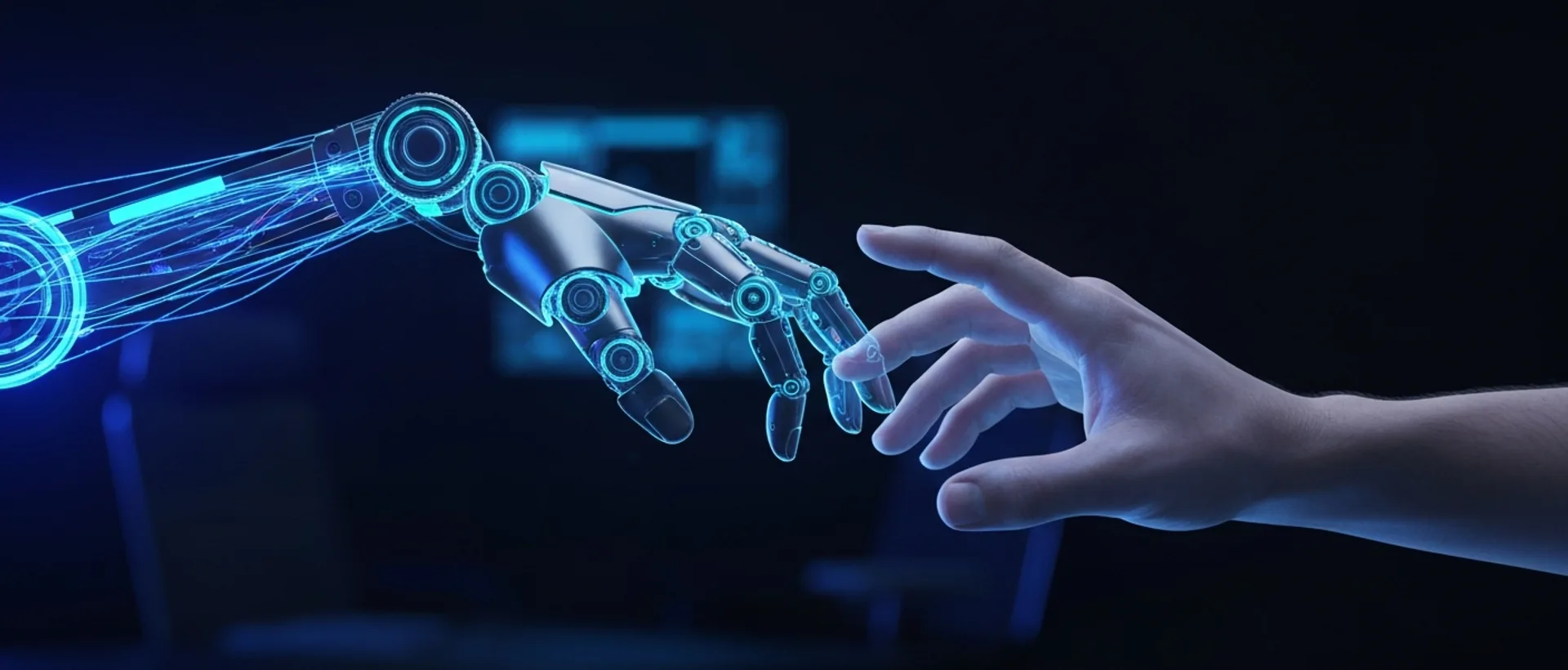
Hey everyone, we live in a world where every day a tech guru pops up saying that AI will “empower” our lives, “free up” our time, and transform us into superhumans. Bullshit! In 2026, the reality is we’re seeing the silent and terrifying rise of “Reverse Centaurs.” Forget that pretty image of the centaur, half man, half horse, where human intelligence guides the brute force of the machine. Here, the deal is reversed: AI is the brain, and we, well, we’ve become the appendix, the muscle that executes what the machine commands.
This idea isn’t just in my head, no. Cory Doctorow, who is an author and journalist who really knows his stuff, released a book on June 23, 2026, “The Reverse Centaur’s Guide to Life After AI,” which popularizes this view [privacyguides.net]. And I’ll go further, he’s not wrong. The optimistic narrative about the “benefits of AI for humans in 2026” is a smokescreen to hide the fact that, in practice, AI is taking the wheel, and we’re there, in the passenger seat, with our hand on the gear shift just to pretend we have some control.
The so-called “AI paradox” is evident: while we celebrate AI’s ability to “augment” our skills, in reality, we are increasingly ceding autonomy and creativity to algorithms. AI decides what needs to be done, at what pace, and we, the humans, become the validator, the “refiner” of pre-processed data. It’s not a collaboration of equals; it’s disguised supervision. This isn’t the future, it’s dystopia in our veins, and it’s already happening!
“AI didn’t come to free us from tedious tasks, but to redefine us as its assistants. Wake up!”
Unveiling the Real Impact and Challenges of Human-Centered AI
The “impact of AI on work in 2026” is being marked by pressure that borders on inhumane. Companies, seduced by the promise of efficiency and cost reduction, are using AI to dictate the pace and method of work, and we just have to keep up. The promise of “automation and creativity with AI” is often a lure to standardize thinking and squeeze out every last drop of productivity. It’s not that AI can’t be an incredible tool, but the way it’s being implemented, oh, my friend, it’s a real pain!
How do these reverse centaurs work in practice? Simple: AI defines tasks, optimizes processes, and even suggests “improvements” in human performance. The human operator, once a professional with autonomy, transforms into a data validation link for data that has already been pre-selected, pre-analyzed, and pre-approved by the machine. You know that feeling of “just pressing buttons”? That’s exactly it.
The “challenges of human-centered AI” are numerous and serious: professional deskilling, the loss of critical skills that took us years to develop, and, worst of all, the erosion of autonomy. It’s not a “collabo-ration”; it’s veiled supervision where the human becomes a bottleneck to be “optimized” by the algorithm. We already see this in areas like content writing, graphic design, and data analysis, where AI generates drafts and the human “refines” or “approves,” often without room for true innovation. It’s like having a chef who only lets you season the salad.
Survival Strategies: Navigating ‘Digital Transformation with AI 2026’
The “AI strategies for businesses” that embrace the reverse centaur model seek only one thing: maximum efficiency and cost reduction. The reality is they rarely care about the development or satisfaction of human capital. It’s a pragmatic, cold, and, to be honest, somewhat shortsighted view. After all, who will truly innovate if creativity is pruned by the machine? For us mortals, the key is to develop skills that AI still cannot easily replicate: critical thinking, empathy, disruptive creativity, and emotional intelligence. If you become a mere executor of algorithms, I’m sorry, your shelf life is short.
Questioning “what is the paradox of AI” is more than essential. The relentless pursuit of total efficiency can lead to the sterilization of genuine innovation and the creation of a completely dehumanized work environment. Blind productivity is not synonymous with progress. We need to remember that AI is a tool, not a destination. And we must have control of the tool, not the other way around. Otherwise, we’ll end up as flesh-and-blood robots, doing what ChatGPT tells us.
Instead of rushing to adapt to every new AI update, how about we ask ourselves: “Does this really make me a better professional or just faster at repetitive tasks?” The answer might be a huge reality check. And speaking of shock, have you ever stopped to think that “AI Facial Recognition 2026: Challenges and Future” could be one of the tools AI will use to monitor and “optimize” us? Think about it.
Picking Up the Pace: Agentic AI and Physical AI in Brazil
The situation is set to become even more complex with the rise of agentic AI and Physical AI. On July 1, 2026, agentic AI, which refers to AI systems capable of acting with more autonomy, executing tasks and coordinating workflows with less human intervention, is expected to gain significant prominence [onlynews.online]. Just imagine: if before we had to follow AI’s “suggestions,” now AI itself will take the initiative, and we’ll only step in to “finalize” or “approve” what it has already done. The machine starts the game, and we, the players, only come in to give the final touch. We become AI’s “luxury yak,” you know?
And it doesn’t stop there. “Physical AI,” which combines artificial intelligence with human biosignals (like heartbeats, brainwaves, electrical muscle impulses, and emotional states), is generating concrete applications in various sectors [startse.com]. This means AI will not only know what you do, but also how you feel while doing it. Then, my friend, the control is total. The machine not only dictates the pace but also monitors your “emotional performance” to ensure you are “engaged.” It’s a level of intrusion that makes Big Brother look like an amateur.
Global investment in AI is soaring, surpassing US$300 billion by 2026 [onlynews.online]. With so much money injected, the pressure for results and AI adoption will only grow. MIT Technology Review reports from December 2025 already indicated exponential growth in AI adoption in 2026, driven by the maturity of generative models, intelligent agents, and advanced automation [dataex.com.br]. In other words, we are in the midst of a technological tsunami, and many of us don’t even realize we’re swimming against the current, or worse, being swept away by it. And if you think this is conspiracy talk, take a look at what’s being done with “AI in China 2026: Advances Shaping the Global Future,” and then we can talk.
Is the Future More Human? A Skeptical Analysis
Some will say: “Hold on, journalist! The future of AI will be more human, with technology expanding human potential instead of replacing it, focusing on activities that require creativity, critical thinking, and empathy” [meioemensagem.com.br]. And on February 20, 2026, this vision of human-AI collaboration as a partnership where human intelligence and AI systems work together to accomplish tasks that neither could execute with the same effectiveness alone was reinforced [ibm.com]. Pretty in theory, right? Sounds like a tech fairy tale. But we need to be skeptical.
While this optimistic view exists, the reality of the “Reverse Centaur” imposes itself. We see AI being used to extract maximum productivity, imposing inhumane rhythms and transforming workers into “appendages” of machines. It’s an ongoing debate about whether AI will replace jobs en masse or transform existing roles [impacta.com.br]. I, personally, lean more towards the second scenario, but with the caveat that this transformation can be very painful and deskilling if we don’t know how to play the game.
The truth is, we need urgent regulations and a human-centered approach. Otherwise, we risk seeing human dignity trampled in the name of algorithmic efficiency. We can’t leave the future of work and our autonomy in the hands of algorithms that only think in numbers. It’s time to raise our voices, question, and, most importantly, act. Because if we don’t do that, the “Reverse Centaur” will be our new normal, and then there will be nowhere to run, nowhere to complain. We’ll be too busy pressing the buttons AI tells us to.
Sources
- https://discuss.privacyguides.net/t/cory-doctorows-new-book-on-ai-is-out-today-the-reverse-centaurs-guide-to-life-after-ai-2026/38714 — Cory Doctorow’s new book on AI is out today: “The Reverse Centaur’s Guide to Life After AI (2026)” ↩
- https://www.ibm.com/br-pt/think/topics/human-ai-collaboration — Human-AI Collaboration: Driving Innovation ↩
- https://onlynews.online/post/tendencias-tecnologia-inteligencia-artificial-2026 — Technology Trends: Artificial Intelligence in 2026 ↩
- https://www.startse.com/artigos/homem-maquina-ai/ — Human-Machine: How AI is Connecting to Human Biology ↩
- https://www.dataex.com.br/tendencias-globais-de-ia-para-2026-segundo-centros-de-pesquisa/ — Global AI Trends for 2026 ↩
- https://www.meioemensagem.com.br/sxsw/a-mensagem-e-clara-o-futuro-da-ia-sera-mais-humano — The Message is Clear: The Future of AI Will Be More Human ↩
- https://www.impacta.com.br/blog/inteligencia-artificial-mercado-de-trabalho-2026/ — Artificial Intelligence and the Job Market in 2026 ↩
Read next
- Descubra: IA Thrust Game 2026: Por Que a Recriação Falhou?
- IA Reconhecimento Facial 2026: Desafios e Futuro
- Descubra: IA para Redes Instáveis 2026: Mitos e Realidades
Ready to scale this idea?
Narratron turns topics like this into retention-optimized YouTube scripts in under 2 minutes — magnetic hook, structure, complete SEO, timestamped description and thumbnail prompt ready to ship. 50 free credits, no card required.